بِسْمِ اللَّهِ الرَّحْمَٰنِ الرَّحِيمِ
شروع اللہ کے نام سے جو بڑا مہربان نہایت رحم والا ہے
In the name of Allah, the Most Gracious, the Most Merciful
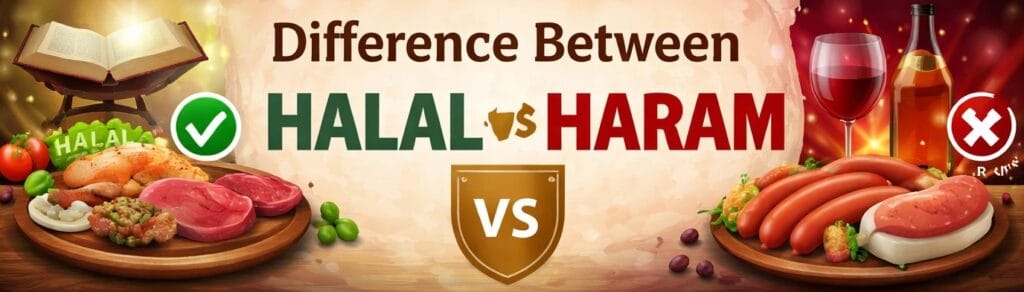
Difference between halal and haram is a fundamental concept in Islam. Islam is a complete way of life that guides Muslims in every aspect, including what they are allowed to eat, earn, and practice. This guidance is closely connected to foods mentioned in the Quran, which clearly distinguish between what is lawful and unlawful. Two essential terms in Islam are halal and haram. Understanding the difference between them helps a Muslim live a life that pleases Allah. The Quran and Hadith clearly explain what is permitted and what is forbidden so that believers can stay on the right path.
In this article, we will explain the meanings of halal and haram, the differences between them, examples from food and daily life, and what the Quran and Hadith say about them in simple, easy words.
The words halal and haram come from Arabic.
Understanding the halal and haram meanings is essential because Allah commands Muslims to follow what is halal and stay away from what is haram. These rules are not meant to make life difficult but to protect faith, health, and morality.
Allah says in the Quran:
“O mankind, eat from whatever is on earth [that is] lawful and good…”
(Surah Al-Baqarah 2:168)
Many people ask, what is haram in Islam? Haram refers to anything that Allah has clearly forbidden in the Quran or through the teachings of the Prophet Muhammad ﷺ.
Some common categories of haram include:
Doing something haram knowingly is considered a sin, and Muslims are encouraged to avoid it as much as possible.
The main difference between halal and haram is obedience to Allah’s commands.
| HALAL | HARAM |
| Allowed by Allah | Forbidden by Allah |
| Brings reward when followed | Brings sin when practiced |
| Good for body and soul | Harmful spiritually or physically |
When comparing haram vs halal, halal brings peace to the heart and blessings in life, while haram leads to spiritual emptiness and loss of Allah’s mercy.
A common question is how something becomes halal or haram. In Islam, only Allah has the right to declare something halal or haram. Humans cannot change these rulings based on desires or trends.
The sources of Islamic rulings are:
If something is clearly mentioned as forbidden in these sources, it is haram. If it is allowed or encouraged, it is halal.
Food is one of the most discussed topics when it comes to halal and haram. The Quran clearly explains haram foods so Muslims can be careful about what they eat.
Allah says:
“He has forbidden to you dead animals, blood, the flesh of swine, and that which has been dedicated to other than Allah…”
(Surah Al-Baqarah 2:173)
So, what is haram food? Haram food is any food that Allah has prohibited for Muslims to eat.
Here is a clear list explaining what foods are haram according to the Quran and Hadith:
Haram meat includes:
The Prophet ﷺ clearly forbade the consumption of these meats.
Other haram foods include:
The Prophet Muhammad ﷺ said:
“Every intoxicant is khamr, and every khamr is haram.”
(Sahih Muslim)
Allah forbade certain foods, not without wisdom. Haram foods can:
For example, alcohol damages the mind and leads to immoral behavior, while pork is harmful to health and cleanliness. Avoiding haram is a sign of obedience and faith.
Halal is not limited to food. It also applies to:
Just as food can be halal or haram, income can also be halal or haram. Cheating, interest (riba), bribery, and fraud are haram ways of earning.
The Hadith of Prophet Muhammad ﷺ explains details that may not be mentioned clearly in the Quran. The Prophet ﷺ taught Muslims to be careful about doubtful matters.
He said:
“The halal is clear, and the haram is clear, and between them are doubtful matters…”
(Bukhari and Muslim)
This Hadith teaches Muslims to avoid doubtful things to protect their faith.
Living according to halal and haram is a sign of true belief. A Muslim who chooses halal over haram shows trust in Allah’s wisdom.
Choosing halal:
Avoiding haram:
Understanding the difference between halal and haram according to the Quran and Hadith is essential for every Muslim. Halal is what Allah has allowed for our benefit, and haram is what He has forbidden to protect us.
By knowing what is haram in Islam, understanding halal and haram meaning, being careful about haram meat, haram foods, and learning about foods mentioned in the Hadith, as well as knowing what foods are haram, Muslims can live a life that pleases Allah.
Whether it is halal vs haram, haram vs halal, or deciding if something is halal or haram, the Quran and Hadith remain our ultimate guide. Choosing halal is not just a rule; it is a path to spiritual success and eternal reward.