بِسْمِ اللَّهِ الرَّحْمَٰنِ الرَّحِيمِ
شروع اللہ کے نام سے جو بڑا مہربان نہایت رحم والا ہے
In the name of Allah, the Most Gracious, the Most Merciful
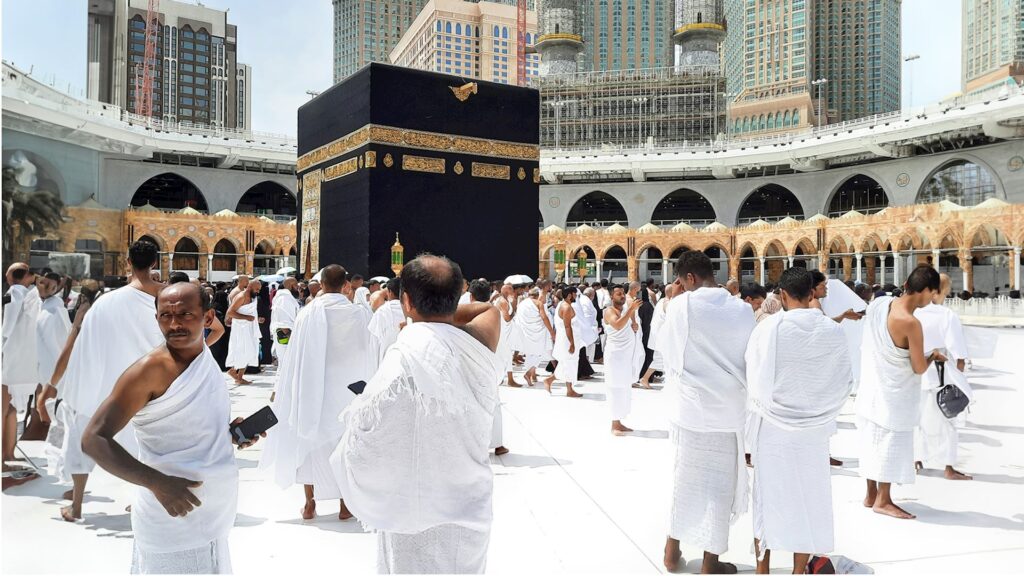
For Muslims around the world, visiting the sacred city of Makkah is a lifelong dream. The pilgrimage to the Masjid al-Haram, where the Kaaba is located, represents the peak of spiritual devotion and submission to Allah. Two sacred pilgrimages are associated with this blessed journey: Hajj and Umrah. While both share similarities, they differ significantly in obligation, timing, rituals, and spiritual weight.
Understanding these differences is essential for every Muslim planning to undertake this sacred journey.
Hajj is the fifth pillar of Islam and an obligatory act of worship for every adult Muslim who is physically and financially able to perform it at least once in their lifetime.
Allah says in the Qur’an:
“And [due] to Allah from the people is a pilgrimage to the House – for whoever is able to find thereto a way.” (Surah Aal-e-Imran 3:97)
Hajj takes place annually during the Islamic month of Dhul-Hijjah, specifically between the 8th and 13th days. It includes a series of rituals performed not only in Makkah but also in Mina, Arafat, and Muzdalifah.
The Prophet Muhammad (peace be upon him) said:
“Whoever performs Hajj for Allah’s pleasure and does not have sexual relations with his wife, and does not do evil or sins, then he will return after Hajj free from all sins as if he were born anew.” (Bukhari & Muslim)
This highlights the immense spiritual reward of Hajj a complete purification of sins.
Umrah, often referred to as the “lesser pilgrimage,” is a highly recommended Sunnah but not obligatory like Hajj. It can be performed at any time of the year and involves fewer rituals. During this blessed journey, reciting heartfelt islamic dua strengthens a believer’s connection with Allah and enhances the spiritual experience.
The core rituals of Umrah include:
Although it is not compulsory, Umrah carries tremendous spiritual benefits. The Prophet (peace be upon him) said:
“The performance of Umrah is an expiation for the sins committed between it and the previous one.” (Bukhari & Muslim)
This shows that Umrah is also a powerful means of seeking forgiveness and spiritual renewal.
The most significant difference is that Hajj is obligatory, while Umrah is voluntary (Sunnah Mu’akkadah) according to most scholars. Missing Hajj without valid reason when one is able is sinful, whereas missing Umrah is not.
Hajj can only be performed during specific days in Dhul-Hijjah. If those days are missed, the pilgrimage must wait until the following year.
Umrah, on the other hand, can be performed at any time of the year. This flexibility allows Muslims to plan their spiritual journey more conveniently, especially when booking umrah packages from toronto or other international departure points.
Hajj takes approximately 5–6 days to complete due to its multiple rituals across different locations.
Umrah can be completed within a few hours, making it easier for those with limited time.
Hajj includes additional major rituals such as:
These rituals are not part of Umrah.
Umrah consists only of Ihram, Tawaf, Sa’i, and Halq or Taqsir (shaving or trimming hair).
While both are highly rewarding, Hajj holds a greater status because it is a pillar of Islam.
The Prophet (peace be upon him) said:
“An accepted Hajj brings no less a reward than Paradise.” (Bukhari & Muslim)
Umrah, although immensely rewarding, does not carry the same obligatory weight.
Allah says in the Qur’an:
“And complete the Hajj and Umrah for Allah.” (Surah Al-Baqarah 2:196)
This verse establishes the legitimacy and importance of both acts of worship. Scholars explain that Hajj is compulsory, while Umrah is strongly encouraged.
The Sunnah of the Prophet Muhammad (peace be upon him) further clarifies the procedures and virtues of both pilgrimages. He performed one Hajj (known as Hajjat al-Wada) and several Umrahs throughout his life, demonstrating their importance in Islamic practice.
If you have not yet performed Hajj and you are financially and physically capable, Hajj must take priority as it is obligatory.
However, many Muslims perform Umrah before Hajj to spiritually prepare themselves. Umrah serves as a beautiful introduction to the sacred atmosphere of Makkah and helps pilgrims understand the rituals in a less crowded and time-restricted environment.
In modern times, travel arrangements have become easier, but planning still requires attention to documentation, accommodation, and the appropriate umrah visa to ensure a smooth journey.
Hajj and Umrah are both sacred journeys that strengthen a Muslim’s faith, humility, and connection with Allah. While they share similarities such as Tawaf and Sa’i, they differ in obligation, timing, rituals, and overall spiritual status.Hajj is a once-in-a-lifetime obligation for those who are able, performed during specific days and involving comprehensive rituals across multiple sacred sites. Umrah, however, is a voluntary pilgrimage that can be performed at any time of the year and requires fewer rituals.