If you’ve been searching for home decor ideas art and still feel stuck staring at a wall that looks completely wrong — too bare, too random, or like it belongs in someone else’s house — I want you to know that feeling is so much more common than people admit. I’ve walked into beautifully furnished rooms with gorgeous sofas and expensive rugs, and the walls just sit there, flat and forgotten. It’s not a budget problem. It’s not a taste problem. It’s usually that nobody ever explained how art actually works inside a real home.
I’ve spent years writing about interior styling and talking to decorators who transform rooms without gut renovations, and the difference almost always comes down to how art and wall decor are chosen, scaled, and placed — not just what was purchased. In this guide, I’m going to share exactly what those stylists do, so you can make decisions that feel confident instead of guesswork, whether you’re working with one statement piece or an entire gallery wall.
Home Decor Ideas Art: How to Use Wall Art and Objects to Transform Any Room
Most people treat wall art like an afterthought. The furniture gets chosen carefully, the rug gets measured twice — and then a framed print gets hung wherever there’s empty space, almost as a reflex.
That’s where things go wrong.
Art isn’t decoration you add after a room is done. It’s part of the room’s structure — it creates focal points, sets the mood, and tells you where to look the moment you walk in.
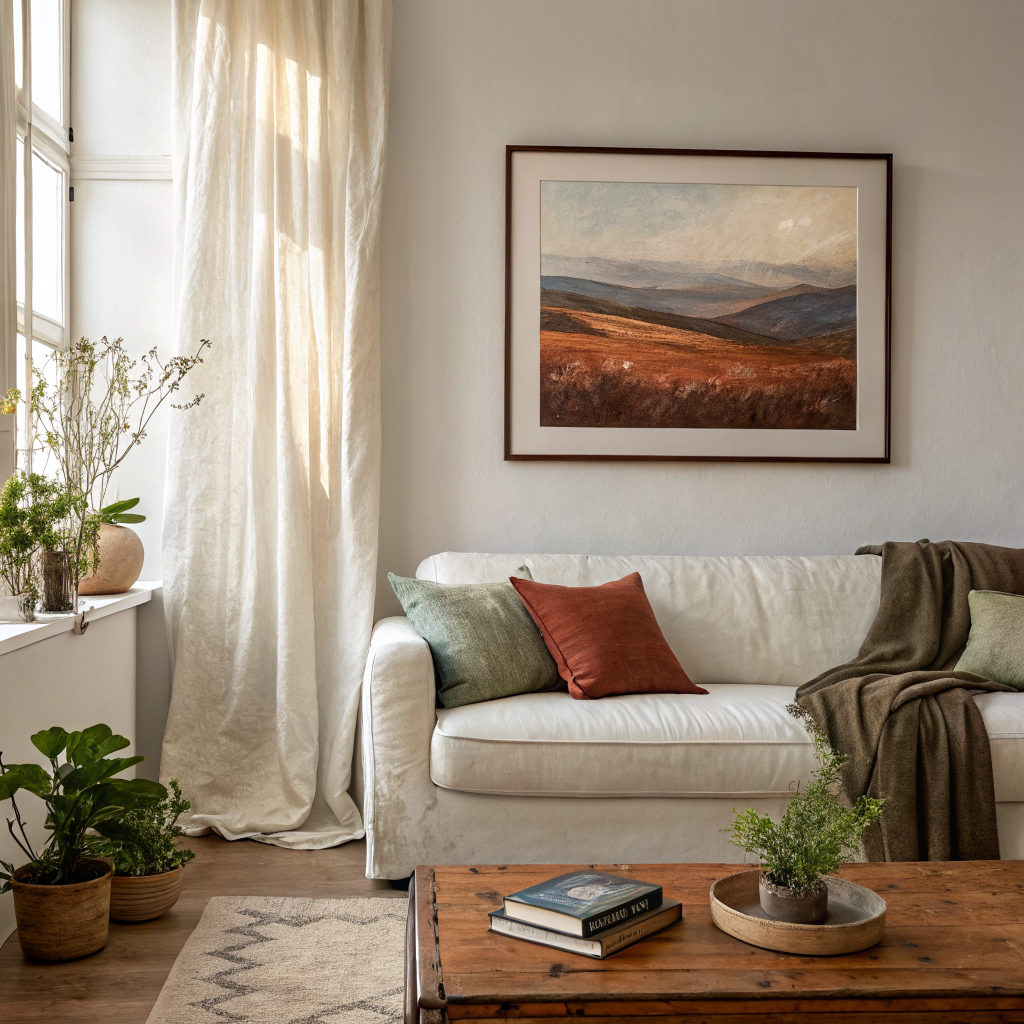
I learned this the hard way with my own living room. I had three medium-sized prints scattered across one wall, each one about 16×20 inches. Nothing felt anchored. A stylist friend looked at it and said, “You need one thing that’s brave enough to matter.” I swapped all three for a single large canvas and the whole room exhaled.
So what actually works? Art transforms a room when it does at least one of these things:
- Anchors the wall — one dominant piece that gives the eye somewhere to land
- Repeats a color from your furniture or textiles to tie the room together
- Adds texture or dimension — woven wall hangings, ceramic objects, or sculptural frames read differently than flat prints
You don’t need to spend a lot. You need to choose with intention — and understand that scale, placement, and layering do most of the heavy lifting art gets credit for.
Understanding Your Space Before You Buy a Single Piece
Before you buy anything — measure the wall first. I know that sounds obvious, but I can’t tell you how many times I’ve heard from people who ordered a print online, loved it on screen, and hung it up only to feel nothing. Usually because it was six inches too small for the space it was supposed to fill.
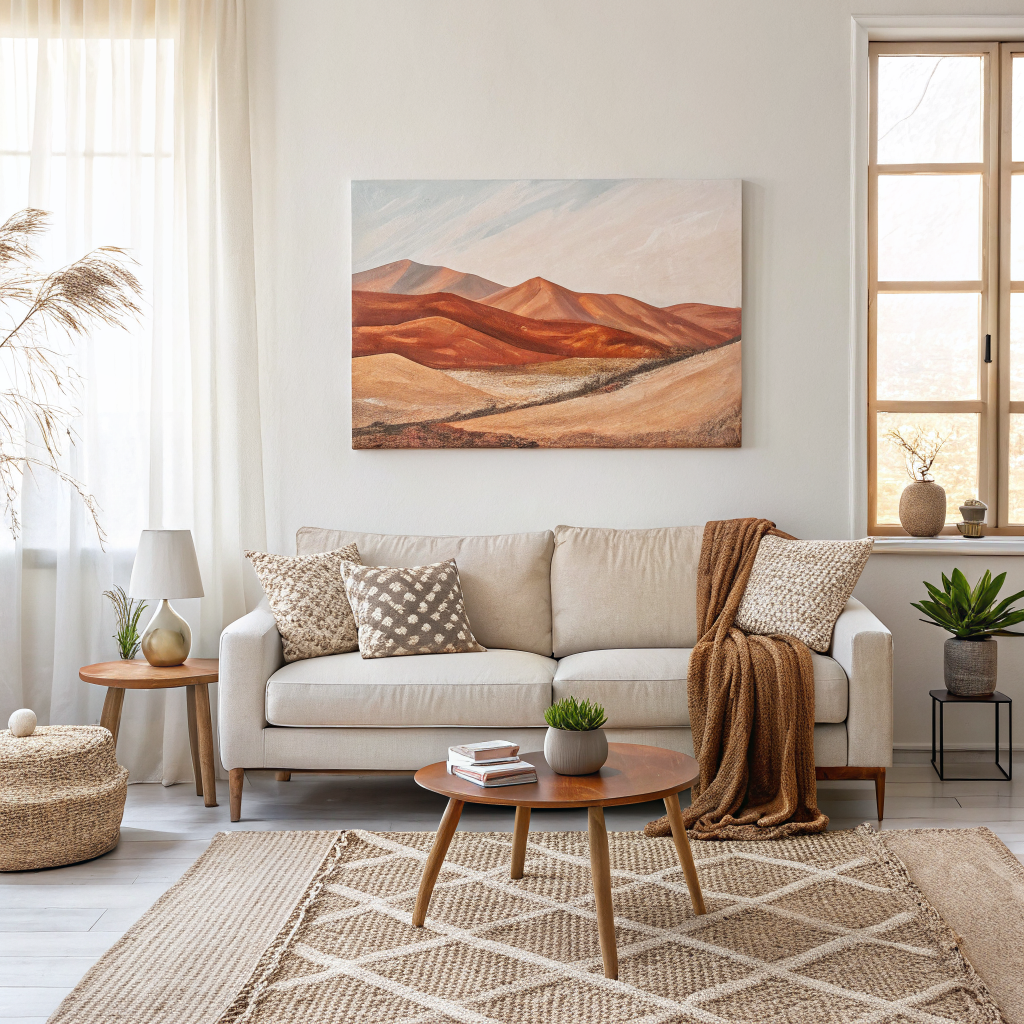
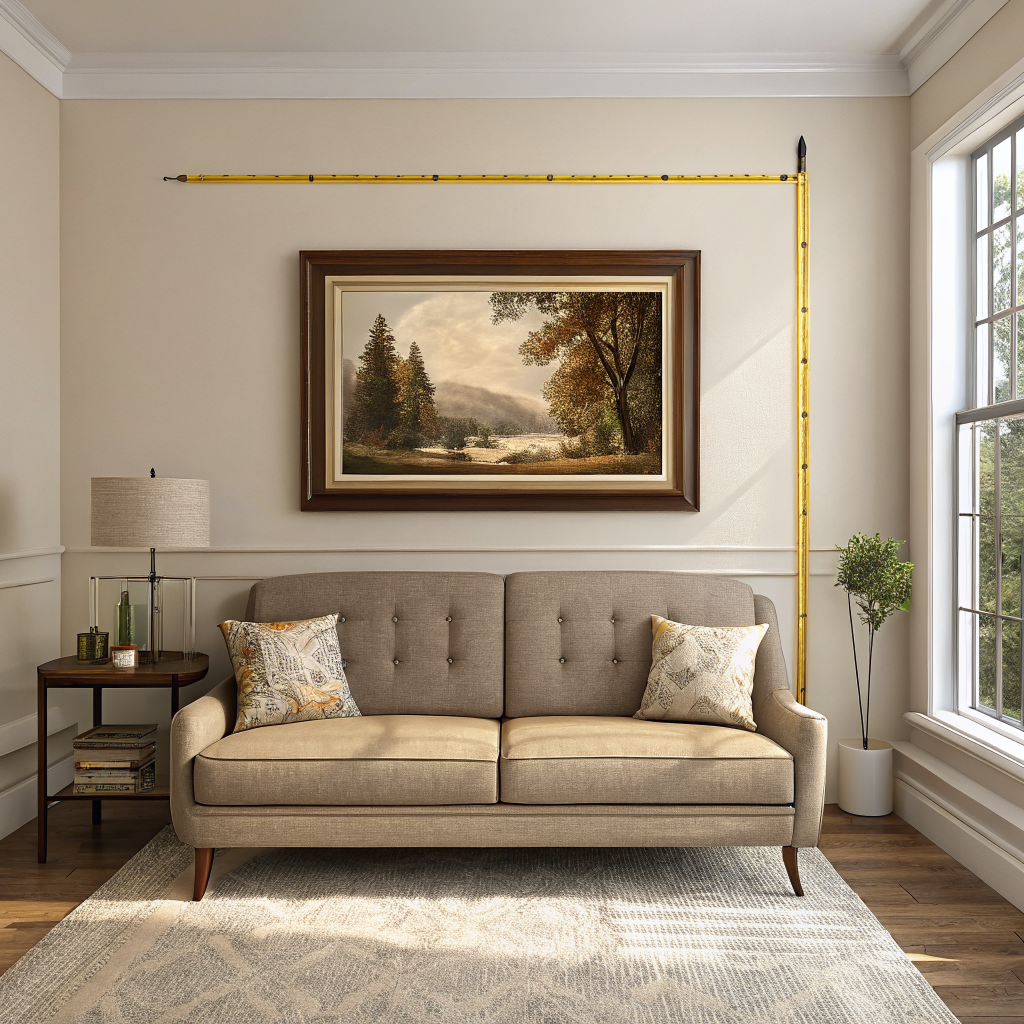
The wall tells you what it needs. A wide wall above a sofa practically begs for something that spans at least two-thirds of the furniture’s width — anything narrower floats awkwardly, like a picture someone forgot to center.
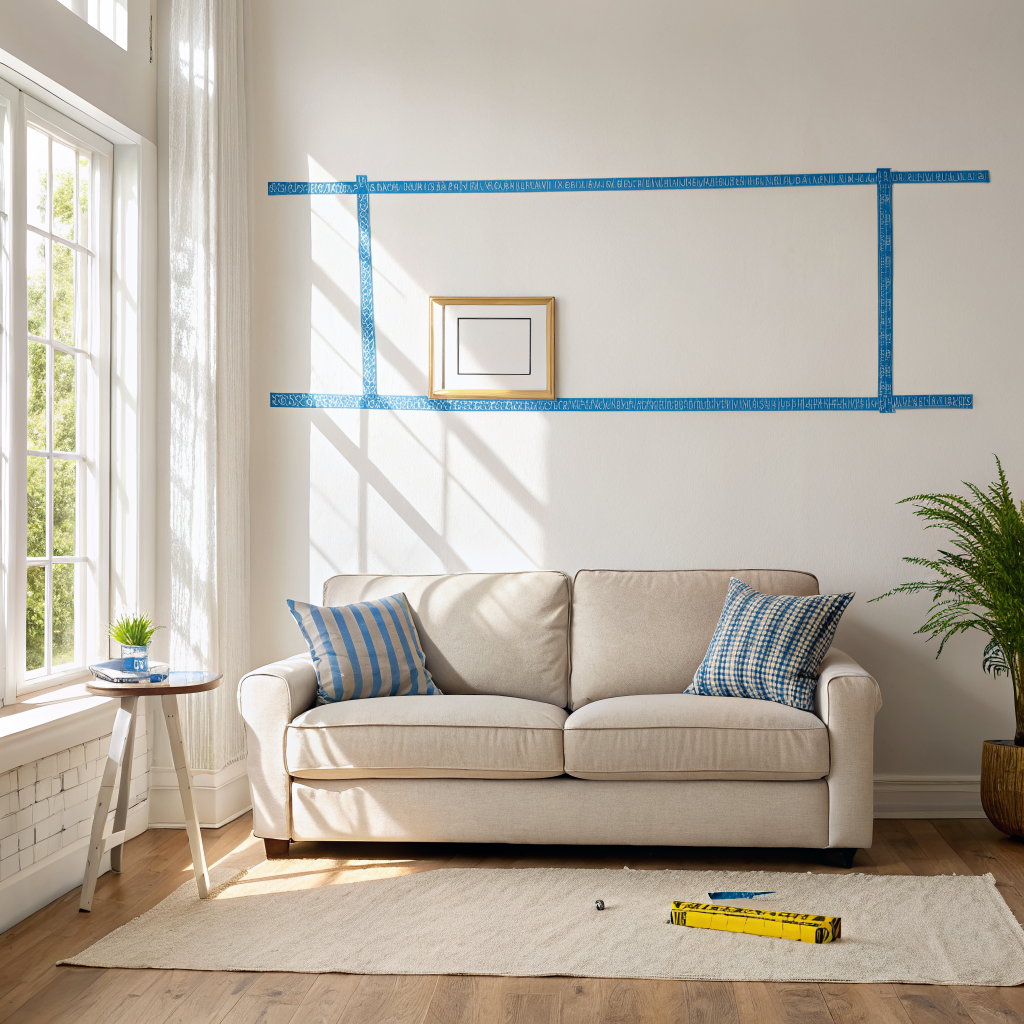
So before you even open a browser, grab a tape measure and some painter’s tape. Mark out the dimensions on the wall itself. Stand back. Live with that taped rectangle for a day.
You’ll immediately see whether it feels too small, too cramped, or just right. That five-minute exercise has saved me from bad purchases more times than any home decor ideas art guide ever did.
Also consider the light in the room. A dark, moody painting disappears in a poorly lit corner. A highly reflective frame in direct afternoon sun creates glare that makes the whole wall hard to look at. The same piece reads completely differently depending on where natural light hits.
The room is already speaking. You just have to listen before you spend a single dollar.
The Different Types of Art That Work in Home Decor (and When to Choose Each)
Not all wall art is the same thing. A framed oil painting, a woven textile, a ceramic sculpture mounted on drywall — these all live under the umbrella of “art,” but they do completely different jobs in a room.
Here’s how I break it down for homeowners who feel overwhelmed by options:
- Canvas paintings and framed prints — Your workhorses. Best for creating a focal point above furniture. Go large or go home — anything under 24 inches wide usually disappears on a standard living room wall.
- Woven wall hangings and textile art — These add warmth and softness that flat prints simply can’t. I recommend them especially in bedrooms or any room that feels a little cold and rigid.
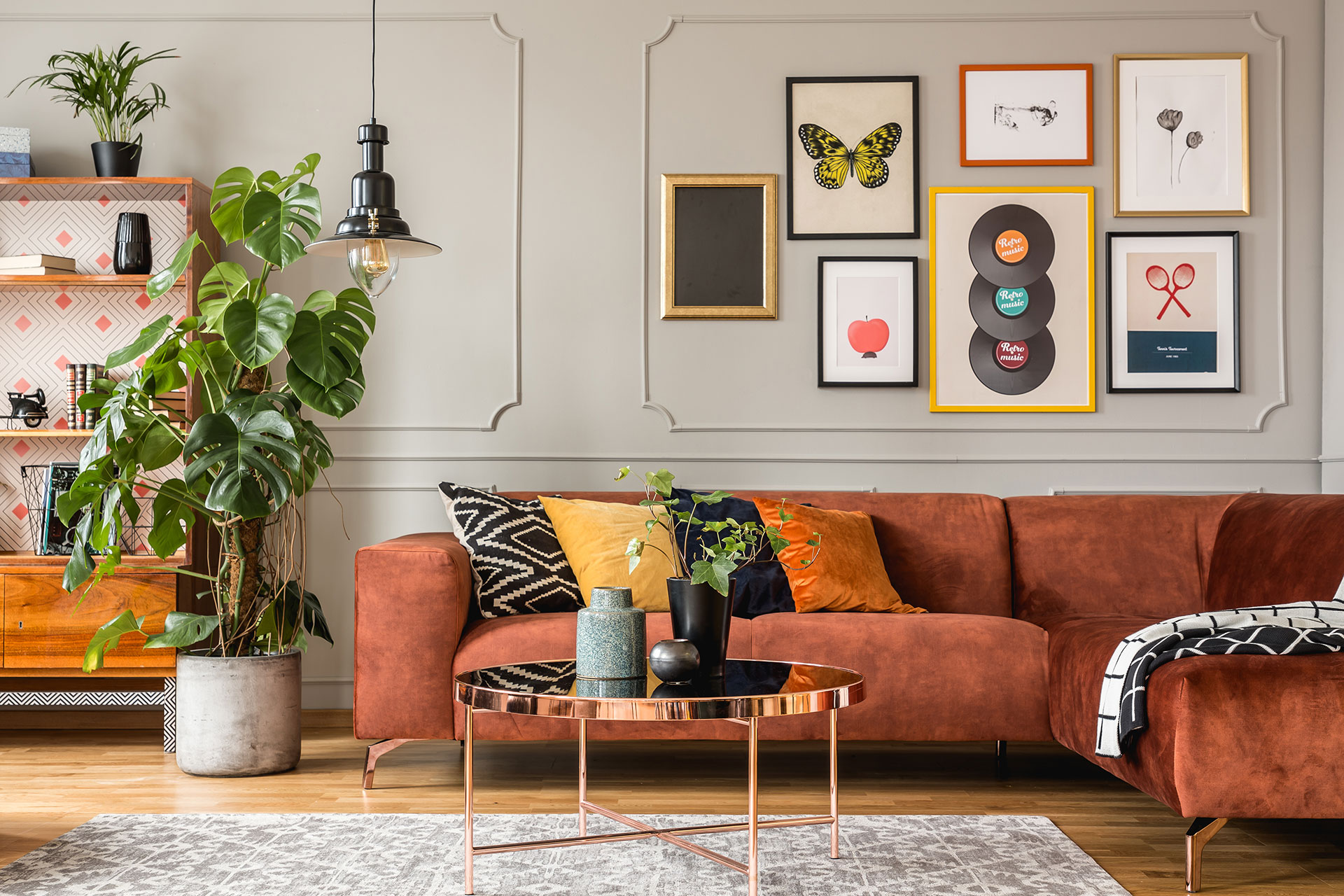
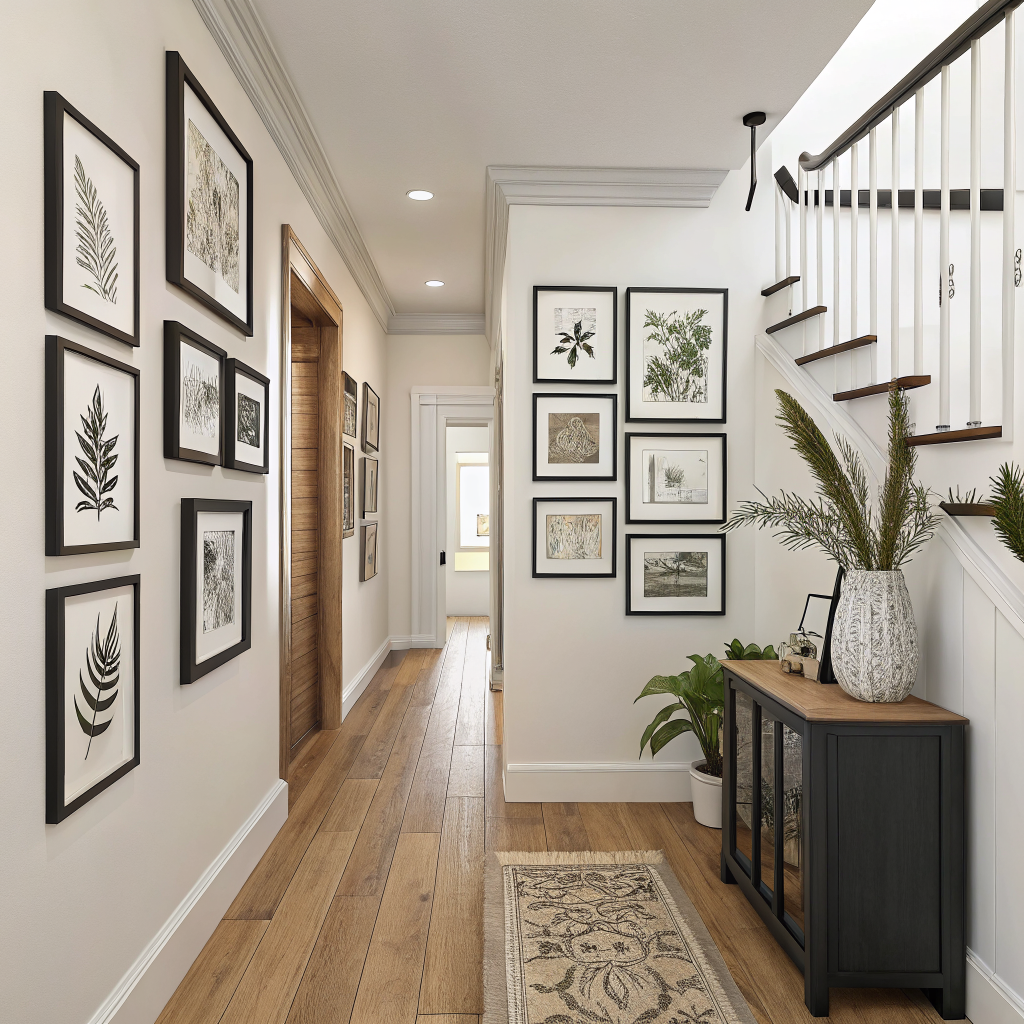
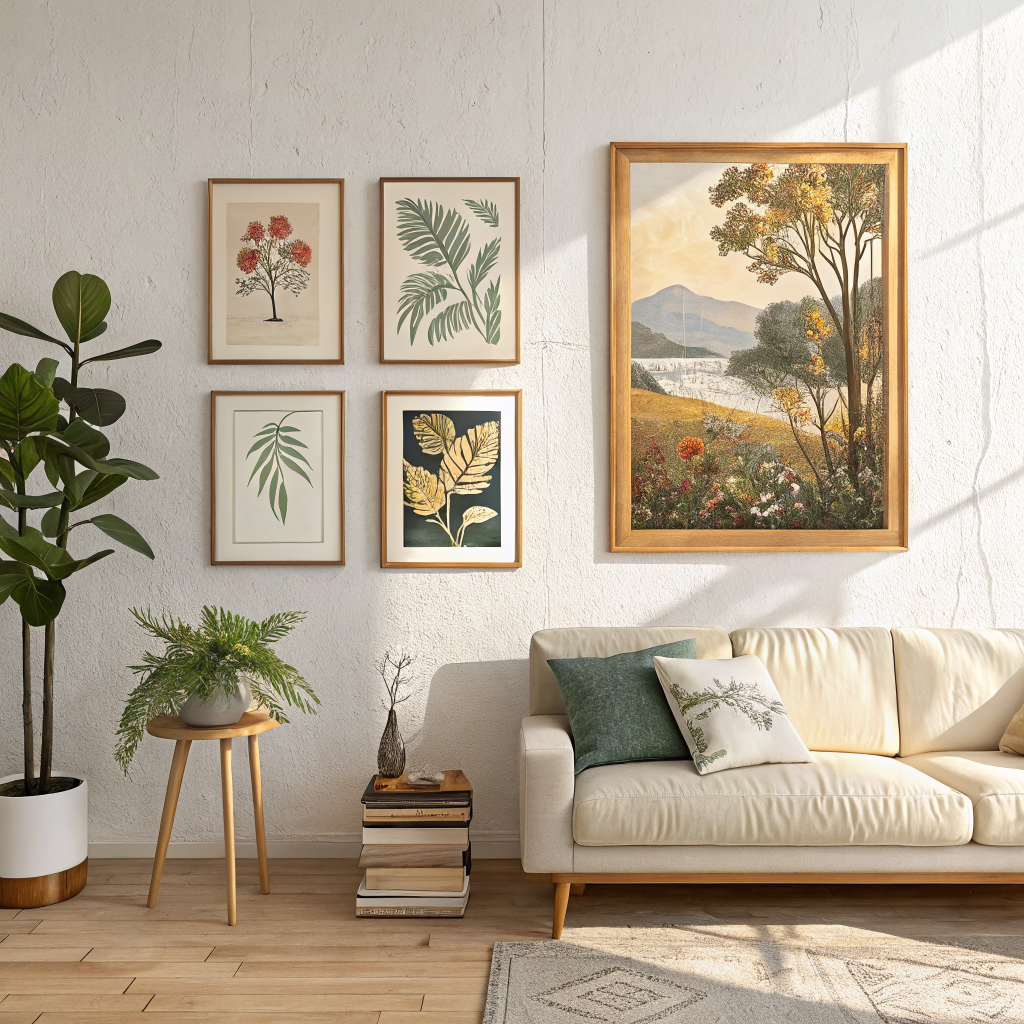
- Gallery walls with mixed frames — Great for hallways and stairwells where one large piece would feel awkward. The trick is keeping either the frame color or mat style consistent so it reads as a collection, not clutter.
- 3D and sculptural wall objects — Wooden sunbursts, ceramic wall plates, metal wall art. These catch light differently throughout the day, which makes a wall feel alive rather than flat.
- Mirrors used as art — Underrated. A well-placed mirror reflects light, visually doubles your square footage, and costs less than most original pieces.
The best home decor ideas art decisions I’ve seen aren’t about picking one type exclusively. They’re about matching the format to what the room actually needs — texture, scale, or light — before worrying about style.
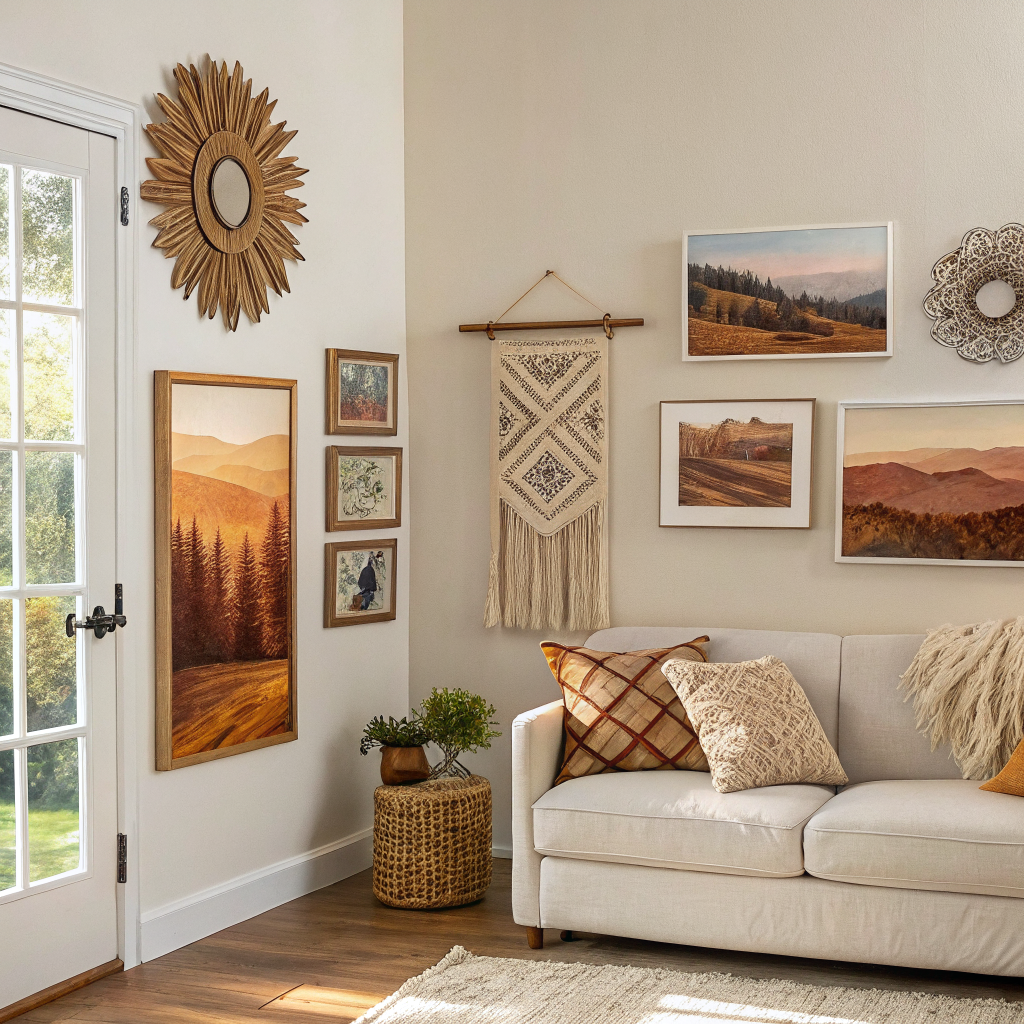
How to Choose Art That Actually Matches Your Interior Style
Most people try to match their art to their furniture. I get it — it feels logical. But that’s usually what produces walls that look safe and forgettable.
The better move? Match art to the mood of the room, not the sofa color.
A warm, rustic living room doesn’t need a painting that contains the exact same oak tone as your coffee table. It needs something that feels lived-in, imperfect, organic — a loose brushstroke landscape, a raw-edged print, a textile with visible weave. The furniture and the art both serve the same feeling. That’s the connection.
Here’s how I pair art style to the four most common home interiors:
- Modern minimalist — One oversized abstract piece, neutral or monochrome. Negative space is the point. Don’t crowd it.
- Warm traditional — Botanical prints, portrait-style paintings, ornate frames. Layering two pieces at different heights works beautifully here.
- Boho or eclectic — Mix freely, but repeat one color across every piece or it reads as chaos rather than character.
- Coastal or Scandinavian — Simple line drawings, nature-inspired photography, unfinished wood or thin metal frames. Nothing fussy.
I once helped a reader whose home decor ideas art choices kept clashing — turned out every piece was a different style entirely, no thread connecting them. We pulled three pieces, kept two, added one textile. Suddenly it breathed.
Pick a mood first. Let the art follow.
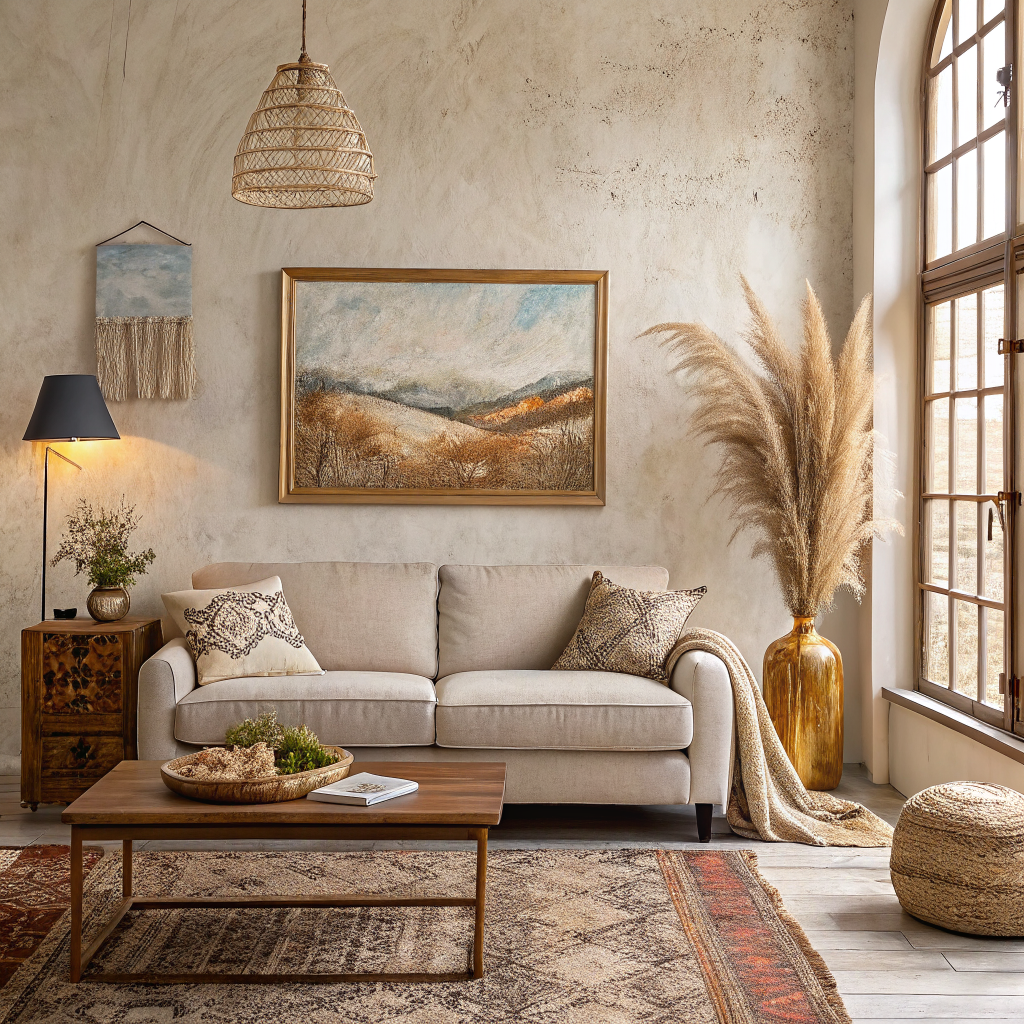
Sizing, Scaling, and Placement Rules That Most People Get Wrong
Most people hang art too high. That’s the single most common mistake I see, and it makes every room feel slightly off in a way nobody can quite name.
The rule I follow: center your artwork at 57 inches from the floor. That’s standard eye level in most homes, and it’s what galleries use. Not the ceiling as your guide. Not the top of the sofa. The floor.
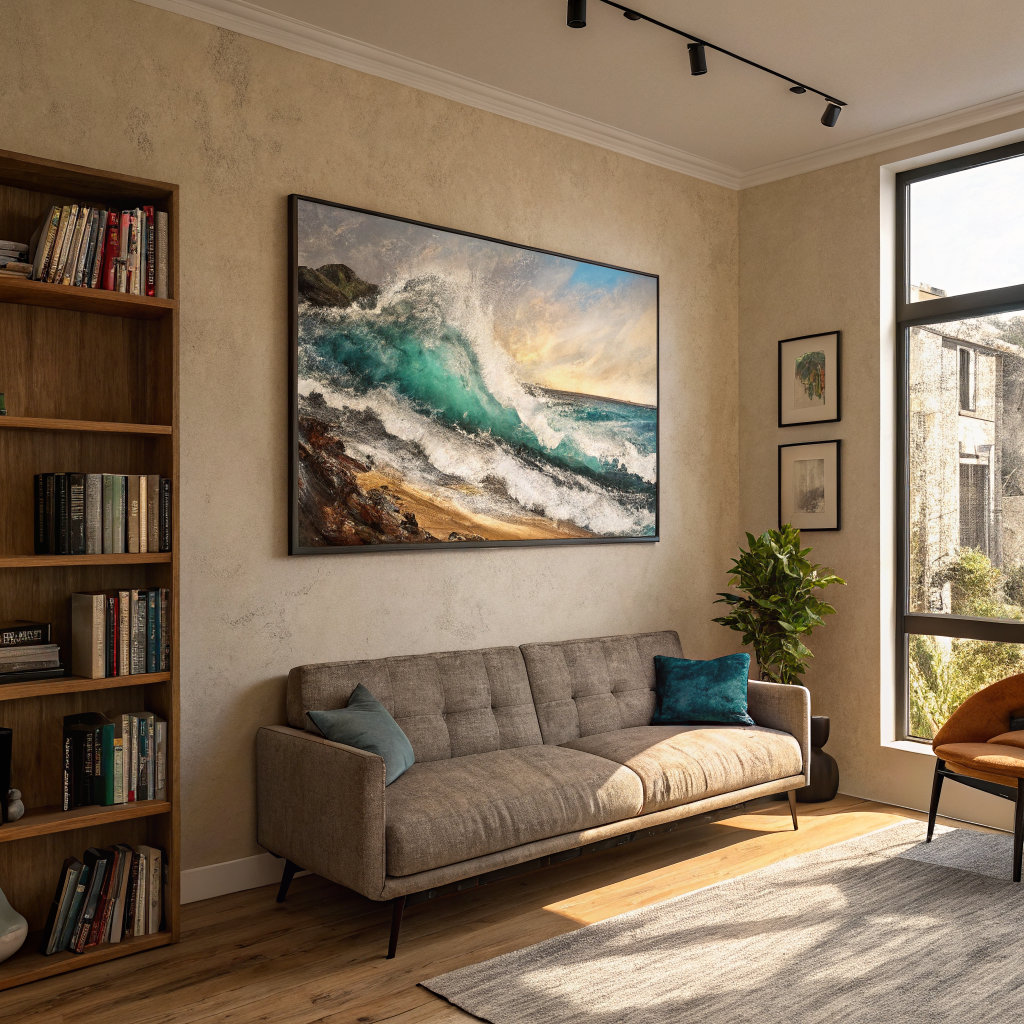
Above a sofa specifically, the bottom edge of the frame should sit 6 to 8 inches above the cushions. Any higher and the art floats, disconnected from the furniture beneath it. Any lower and it looks like it’s sinking.
Sizing is where home decor ideas art planning usually falls apart entirely. A piece should span at least two-thirds of the furniture width below it — ideally closer to three-quarters. I once had a client who’d been staring at a 20-inch print above her 72-inch sectional for two years wondering why the room felt unfinished. That was the whole reason.
For gallery walls, lay everything out on the floor first. Arrange, step back, rearrange. Only then put a single nail in the wall.
One more thing people skip: visual weight matters as much as physical size. A dark, heavily framed piece reads larger than a light watercolor of the same dimensions. Account for that before you commit to placement.
Measure twice. Hang once. It really is that simple.
Building a Gallery Wall That Looks Curated, Not Chaotic
Gallery walls fail for one reason almost every time. Too many frames, too many sizes, no visual anchor holding any of it together.
I’ve seen this so many times that I started calling it the “collected at a garage sale” problem — each piece is fine alone, but together the whole wall just vibrates with noise.
Here’s what actually works: before you touch a single nail, lay every frame out on the floor. Arrange them. Walk around them. The floor is your testing ground, and it costs nothing.
Once you’re happy with the layout, keep one consistent element across every piece — same frame color, same mat style, or same dominant tone in the artwork. That thread is what makes a collection read as intentional instead of accidental.
The spacing matters more than most people realize. Keep gaps between frames between 2 and 3 inches, consistently. Any tighter and it looks cramped. Any looser and the pieces stop feeling related to each other.
Also, pick one largest piece and let it anchor the whole arrangement — usually slightly off-center, slightly lower than you’d expect. Everything else builds around it, not away from it.
This is honestly the best home decor ideas art application for awkward, narrow walls like hallways. One big piece wouldn’t fit. A loose scatter looks wrong. A tightly organized gallery with a clear anchor? That’s where it shines.
Where to Find Quality Art at Every Budget Level
You don’t need a big budget to get art that actually looks good on your walls. I’ve styled rooms with a $15 print from Society6 and rooms with original paintings that cost four figures — and honestly, the difference in impact came down to sizing and placement, not price.
Here’s how I break it down by what you’re working with:
- Under $50 — Digital downloads from Etsy, printed locally at a copy shop, then framed with a simple IKEA frame. I’ve done this in my own home and nobody ever asked if it was expensive.
- $50–$150 — Society6 and Desenio both carry artist-designed prints that ship ready to hang. Look for pieces with strong contrast — they read well from a distance.
- $150–$500 — This is where thrift stores earn their reputation. Estate sales and antique markets regularly have large original canvases that just need a fresh frame or cleaned glass.
- $500 and up — Original work from local artists or Saatchi Art. One piece at this level, sized right, does more for your home decor ideas art goals than ten smaller cheap ones combined.
The trap people fall into? Buying something small because it’s affordable, then buying three more to fill the wall. You end up spending more and the room still looks scattered.
Bigger, fewer, intentional. That works at every price point.
How to Layer Art With Other Decor Elements for a Pulled-Together Look
Art looks lonely on its own. That’s something I didn’t fully understand until I started treating walls like a whole composition, not a single frame hung and done.
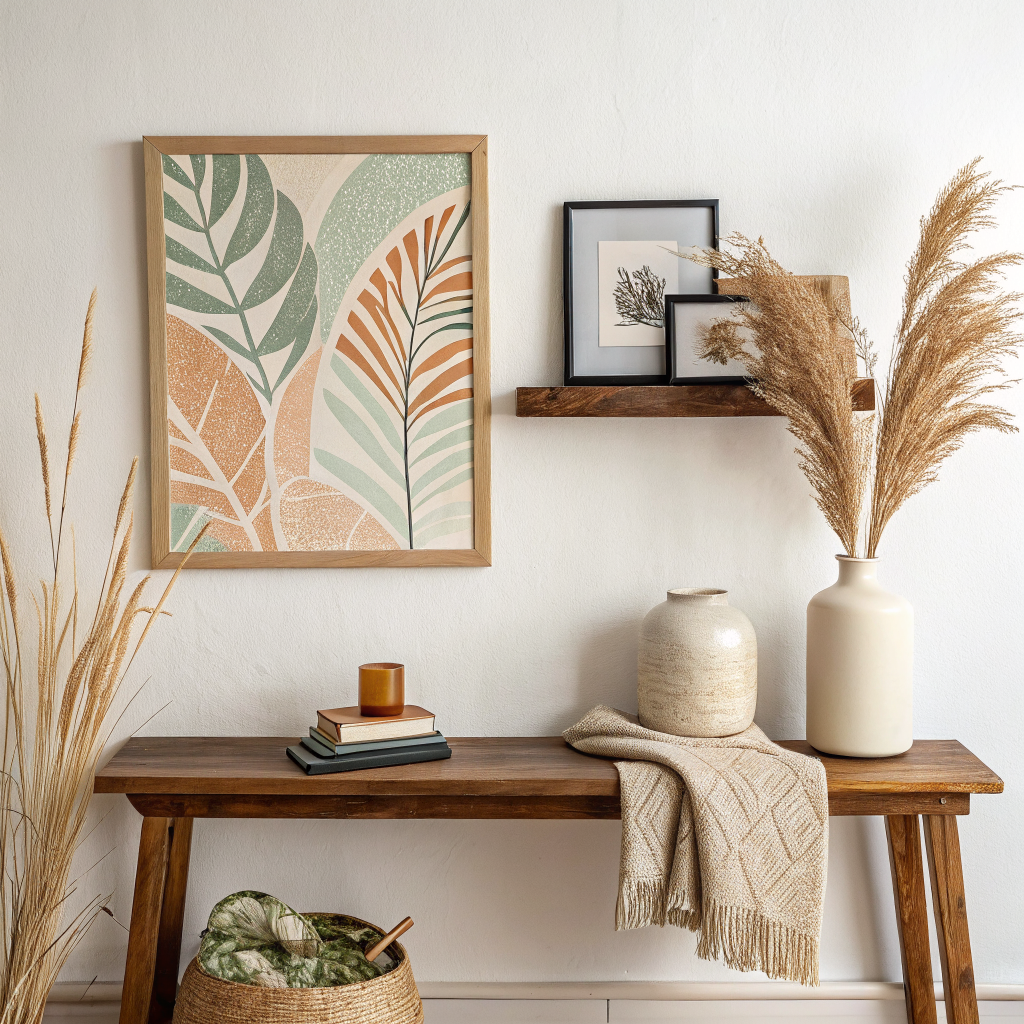
The shift happens when you connect the wall to the room below it. Pull one color from your artwork into a throw pillow, a vase, or a candle on the shelf nearby. It sounds small. It completely changes how intentional the space feels.
Ledge shelves are one of my favorite tools for this. Instead of hanging one piece flat, I’ll lean a canvas against the wall on a narrow ledge, then layer a smaller framed print in front of it and a single ceramic vase off to one side. Depth. That’s what you get — and it photographs beautifully too.
Here’s something most people skip: the space below the art matters as much as the piece itself. A lamp, a sculptural object, a stack of books — these ground the artwork and make it feel like it belongs in the room instead of floating above it.
I once helped a reader whose home decor ideas art choices kept feeling flat despite beautiful prints. Nothing was wrong with the art. The shelf beneath it was completely bare. We added a small plant and one amber glass bottle. Done.
Texture contrast is the last thing to layer in. A smooth, glossy print paired with a linen throw draped nearby, or a raw-edged canvas above a tactile jute rug — the contrast is what makes each element read stronger, not weaker.
Mistakes That Make Even Expensive Art Look Out of Place
I’ve seen this happen with a $1,200 canvas that looked completely wrong. Not because the art was bad — it was stunning. Because everything around the hanging decision was wrong.
The most common mistake? Hanging it too high. The piece sat six inches above where it should have been, and the whole wall felt like it was floating off into the ceiling.
Sound familiar?
The second mistake is ignoring the frame. A beautiful piece of art inside a cheap, thin frame loses half its presence immediately. The frame is part of the art — it either elevates what’s inside or quietly undermines it.
Here are the mistakes I see most often, even with genuinely good pieces:
- Wrong scale — A small piece on a large wall. The art disappears and the room feels unfinished no matter how good the painting is.
- No relationship to the furniture — Art hung in isolation, with nothing below it to ground it. It reads like a mistake, not a choice.
- Mismatched lighting — A dark, richly colored piece shoved in a poorly lit corner. Nobody can see what you spent money on.
- Too many competing pieces — Every wall doing something loud. The eye gets exhausted and nothing stands out.
The fix is almost always simple. Step back, look at the whole room, and ask what the wall is actually doing — not just what’s hanging on it. Good home decor ideas art thinking starts there, not at the checkout page.
Final Thoughts: Great Art Decor Is About Intention, Not Perfection
Perfect rooms aren’t the goal. I want to say that plainly, because most people I talk to get stuck waiting until they have the right budget, the right wall space, the right furniture arrangement. And the walls stay bare for another year.
The rooms I’ve loved most — the ones that made me stop and actually look around — weren’t finished. They were decided. Someone made a choice, committed to it, and let the room reflect something real about the person living there.
That’s what good home decor ideas art thinking actually is. Not a formula. A series of small, honest decisions made with your specific room in mind.
Start with one wall. One piece, sized correctly, hung at the right height. See how that changes the room before you touch anything else. I’ve watched that single move shift an entire space from “almost there” to “this is home.”
You don’t need to figure out every wall at once. Rushing that is what leads to the scattered, nothing-quite-fits problem in the first place.
So pick the wall that bothers you most right now. Measure it. Think about the mood — not the sofa color. Then make one brave, intentional choice and hang it at 57 inches from the floor.
That’s genuinely all it takes to start. The rest follows naturally from there.