
If you’ve been searching for home decor ideas UK homes can actually pull off — not just Pinterest fantasy rooms that look nothing like a real British terrace or flat — I completely understand the frustration. I’ve spoken to so many homeowners who feel stuck. They have good taste. They have a budget. But somehow the rooms still don’t come together the way they imagined.
I’ve spent years writing about British interiors, and what I’ve noticed is that most advice online ignores the specific things that make UK homes unique — the sash windows, the low light, the period details that are gorgeous but awkward to style around. In this article, I’m going to walk you through what’s actually working in UK interior design right now, room by room, with real guidance you can use this weekend.
What Home Decor Ideas UK Homeowners Are Actually Embracing Right Now
Right now, the shift I keep seeing across UK homes is a move away from all-white everything toward warmer, lived-in layers. People are done with rooms that look like they belong in a show home but feel completely cold to actually sit in.
And honestly, that makes so much sense. British homes — especially older terraces and Victorian semis — have character built right into the walls. Deep skirting boards, corbelled fireplaces, that lovely awkward alcove next to the chimney breast. Trying to strip all of that out with stark minimalism just fights the bones of the house.
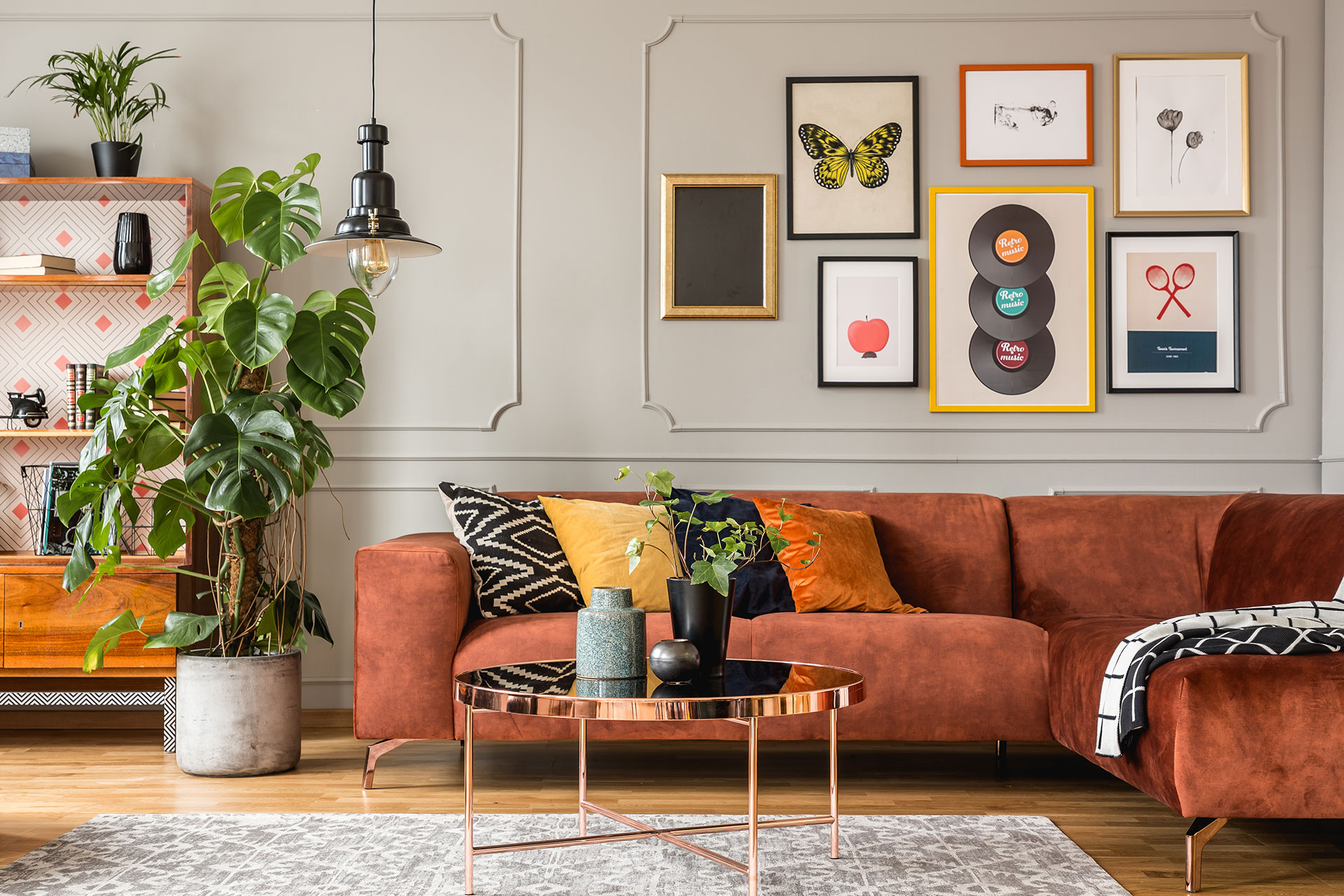
What’s working instead? Warm neutrals paired with one or two deeper tones — think aged terracotta, dusty sage, or a soft tobacco brown. Not full-on dark rooms. Just enough depth to make the space feel intentional rather than empty.
I spoke to a homeowner in Sheffield last year who had repainted her living room three times trying to get it right. The problem wasn’t the colour. It was that she kept going lighter, when the room actually needed weight.
If you want a starting point before diving into room-by-room changes, some of the best simple home transformation ideas focus on exactly this — adding depth without a full renovation.
The home decor ideas UK homeowners are responding to most strongly right now aren’t trendy. They’re grounded, tactile, and built to last more than one season. That’s the shift worth paying attention to.

How British Architecture and Climate Shape Interior Design Choices
Most home decor advice online is written for American ranch houses or Scandinavian apartments. Neither of those is a 1930s semi-detached in the Midlands.
UK homes come with their own set of constraints — and opportunities. Ceiling heights that vary wildly between floors. Rooms that face north and barely see direct sun from October through March. Original features like picture rails and dado rails that most American advice just ignores entirely.
The light thing is the big one. I always tell homeowners: before you pick a paint colour, sit in the room at midday on a cloudy Tuesday. That’s your reality, not the summer afternoon you tested the tester pot in.
Cool grey looks almost lavender in north-facing UK rooms. I’ve seen it happen in probably a dozen homes I’ve visited or consulted on. The homeowner loved it in the tin, hated it on the wall, and couldn’t figure out why.
The fix? Lean into warm undertones, not away from them.
Period features are the other thing worth thinking about. A corbelled fireplace or original sash window isn’t an obstacle to good home decor ideas UK rooms can carry — it’s the whole foundation to build around. Work with the bones, not against them.
That shift in thinking changes everything about how you approach a room.

Bringing the Garden Indoors: Jardin-Inspired Decor That Works Beautifully in UK Homes
There’s something about bringing the outdoors inside that UK homeowners have always done instinctively — a jug of garden flowers on the windowsill, a trailing ivy in the kitchen. But the jardin-inspired look that’s all over Pinterest right now takes that instinct much further.
Think botanical prints on linen cushions, wicker side tables, terracotta pots clustered in odd numbers near a window. It’s earthy without being muddy. Layered without feeling cluttered.
I tried this in my own dining room about two years ago. I was convinced I needed three large plants to make an impact. Turns out, one substantial plant — a big fiddle-leaf fig in a wide ceramic pot — did more for the room than six smaller ones ever had.
The reason this works so well as home decor ideas UK rooms can genuinely carry is that British homes already have that connection to nature baked in. Sash windows framing a garden view. Original tiles with leaf motifs. The bones are already there — you’re just echoing them inward.
Here’s what trips people up though. They buy beautiful plants and then bringing the outdoors inside ends up feeling more like a garden centre than a home.
The fix is restraint in plant variety. Stick to two or three species maximum, repeated in different sizes across the room. Same family, different scale. That repetition is what makes a space feel designed rather than collected.

Persian and Iranian Design Influences That Elevate British Interiors
Persian and Iranian design has been quietly influencing British interiors for decades. But the way it’s showing up right now feels different — less formal, more woven into everyday rooms.
I visited a homeowner in Edinburgh last spring who had inherited a small Persian rug from her grandmother. She’d kept it rolled up in a cupboard for three years, convinced it wouldn’t work in her modern flat. One afternoon it went down in her living room, layered over a jute base, and the whole space suddenly had a soul it had lacked.
That’s the thing about Persian-influenced home decor ideas UK homes respond to so naturally. The geometry, the deep jewel tones, the hand-finished textures — they match the richness of British period architecture in a way that flat, mass-produced decor never quite manages.
So what actually works? It’s less about buying a full set of matching pieces and more about layered eclectic interior styling — one Persian rug, one ceramic piece, one embroidered cushion, all allowed to breathe around them.
The mistake most people make is overcrowding it. Three Persian elements maximum in a single room. Any more and it tips from curated into chaotic.
The colours are surprisingly compatible with UK light too. Saffron, deep indigo, dusty rose — these home decor ideas work beautifully in rooms that struggle with grey winter light, because the warmth comes from the objects themselves, not the walls.

Lessons From New Zealand Home Decor That Translate Perfectly to UK Spaces
New Zealand interiors don’t get nearly enough attention in UK design circles. They probably should.
What Kiwi designers do brilliantly is mix raw natural materials with clean, uncluttered rooms — without the coldness that Scandinavian minimalism sometimes leaves behind. There’s warmth there. Tactile warmth. The kind that comes from unpainted timber, woven wool, and stone that hasn’t been over-polished.
I started paying attention to this properly after a reader sent me photos of her Auckland cousin’s living room. Simple room. Low furniture, one large piece of driftwood mounted on the wall, a chunky wool throw. It looked effortless in a way that most styled rooms don’t.
The reason it translates so well to UK homes? Both climates push you toward cosy over cool. You’re not designing for year-round sunshine. You’re designing for grey Tuesday afternoons, and that changes everything about what materials actually feel good to live with.
So what works here in practice? Natural fibre rugs — jute, seagrass, chunky wool — used as the foundation layer rather than an afterthought. Unfinished wood on shelves or side tables. Muted, earthy pottery in odd clusters.
The trap is buying pieces that look natural but feel synthetic. I always tell homeowners: run your hand across it before you buy. If it doesn’t feel good to touch, it won’t feel right in the room either.
These are the home decor ideas UK rooms absorb quietly and wear for years.

Room-by-Room Styling Guide for Terraced Houses, Flats, and Period Properties
UK homes aren’t one thing. A Victorian terrace in Manchester has almost nothing in common with a modern flat in Bristol or a 1960s semi in Surrey — and that matters the moment you start making decisions about furniture scale, colour, and layout.
I’ll be honest: I got this wrong in my own first flat. I bought a sofa that looked perfect in the showroom and spent six months squeezing past it to reach the window.
So here’s how I’d approach each type, based on what I’ve actually seen work.
In terraced houses, the challenge is almost always the through-lounge — that long, narrow ground floor that eats furniture. Zone it with a rug rather than trying to fill it. Two rugs, actually. One under the sofa, one under the dining table. It reads as two rooms without a single wall going up.
For flats and apartments, the principles around decorating small apartment spaces apply directly — vertical storage, mirrors placed opposite windows, furniture that floats rather than hugs every wall.
With period properties, the home decor ideas UK designers keep returning to are the same: work with existing features, not around them. Paint the alcoves a deeper tone than the main wall. Let the fireplace be the anchor.
One rule cuts across all three. Pick one focal point per room and build everything else toward it. Most rooms that feel chaotic are just rooms with three competing focal points and no winner.

How to Layer Texture, Colour, and Light the Way British Interior Designers Do It
Most rooms feel flat because homeowners treat texture, colour, and light as three separate decisions. They’re not. They work as one system, and pulling them apart is where things go wrong.
Here’s what I mean. Last year I helped a friend in Bristol restyle her sitting room. New cushions, new throws, fresh paint. Still felt lifeless. The problem? Every surface had the same finish — matte walls, flat cotton upholstery, a smooth ceramic lamp. Nothing caught the light differently from anything else.
The fix was simple. We swapped one cushion for a ribbed velvet, added a linen shade to the lamp, and put a hammered brass tray on the coffee table. Total spend: about £40. The room finally had depth.
That’s the principle British designers follow instinctively. Vary the surface finish before you vary the colour. Matte beside sheen. Rough beside smooth. Woven beside polished.
Colour comes second — and if you’re unsure where to start, choosing the right colour palette before committing to furniture is always the smarter sequence.
Light comes last, but it does the most work. One warm-bulb table lamp positioned below eye level does more for a room’s atmosphere than a ceiling light ever will. Most UK living rooms have one overhead light and wonder why evenings feel harsh.
These are the home decor ideas UK designers return to again and again — not because they’re complicated, but because they actually work.

Where to Shop for Quality Pieces Without Overspending in the UK Market
The UK high street is genuinely good right now — better than it gets credit for. Oliver Bonas, Habitat, and H&M Home all carry pieces that punch above their price point, especially in ceramics and textiles.
That said, the biggest mistake I see homeowners make is buying everything from one place. A room styled entirely from one shop looks like a showroom. It doesn’t look like a home.
Mix it up. Spend on the thing you touch every day — the sofa, the rug, the bed linen. Save on the things that just sit there looking pretty. A ceramic vase from a charity shop, painted a warm terracotta, can hold its own next to something you spent real money on.
I found affordable pieces that look expensive are almost always the ones with weight, matte finishes, or natural materials — not the ones with the biggest price tag attached.
Facebook Marketplace is my actual secret weapon for UK buyers. In the last year alone, I’ve found a solid oak side table for £15 and a pair of linen curtains for £8 that fit a standard sash window perfectly.
The home decor ideas UK homeowners keep returning to — layered texture, natural materials, warm tones — are exactly the kinds of things that photograph beautifully secondhand too. You’re not hunting for a specific style. You’re hunting for good bones and honest materials.
That’s the shift worth making. Buy fewer, better things, and let them take time to accumulate.

Decorating Mistakes That Make UK Homes Look Dated or Unfinished
I see the same mistakes come up in almost every UK home I visit. And the frustrating thing? They’re usually small. Nothing that requires a renovation. Just habits that quietly undermine a space.
The biggest one is matching everything too closely. Cushions that match the curtains that match the rug. It looks intentional in the shop. In a real room, it reads as flat and a bit tired — like the space was assembled from a catalogue rather than lived in.
Sound familiar?
The second mistake: hanging artwork too high. I used to do this myself. Eye level feels wrong until you try it, and then you can’t understand why you spent years staring at frames floating near the ceiling. Hang lower than feels comfortable. Usually about 57 inches to the centre — that’s the standard museum height, and it works.
Then there’s the overhead-light-only problem. I’ve walked into rooms with beautiful furniture and good home decor ideas — UK bones, decent palette, real effort — and the whole thing felt harsh because one ceiling bulb was doing all the work. Add a table lamp. Just one. The difference is immediate.
The last thing, and this is the one people miss most: ignoring the details that elevate any room — the switches, the skirting paint, the light pulls. They sound minor. They’re not. Scuffed woodwork or a cheap plastic switch plate pulls focus in ways you don’t consciously notice, but your eye registers every time.
Fix the small things. They do more than most people expect.

Final Thoughts: Building a Home That Feels Distinctly Yours in a British Context
Here’s what I want to leave you with. All of this — the layering, the light, the rug placement — only works if the room actually feels like you made the choices. Not Pinterest. Not a mood board you pinned three years ago.
That’s the part most home decor advice skips. Making your space feel like you is genuinely harder than following a trend, and it’s the thing I’d point anyone toward before they buy a single new piece.
I learned this the slow way. Spent two years chasing a particular “look” in my own sitting room. Pale linen, oak, minimal everything. It was fine. Looked right in photos. Felt like nobody actually lived there.
The moment I stopped optimising for a style and started buying things I actually liked — a slightly chaotic gallery wall, a dark olive velvet chair that broke every neutral rule — the room finally exhaled.
That’s what British homes do well when you let them. They carry personality without effort, because the bones are already so full of character. Your job isn’t to impose a look. It’s to stop fighting the room and start listening to it.
The best home decor ideas UK homes respond to aren’t the most expensive or the most on-trend. They’re the ones chosen with some actual intention behind them.
Start with one room. Fix the light first. Then the texture. Let the rest come slowly.