بِسْمِ اللَّهِ الرَّحْمَٰنِ الرَّحِيمِ
شروع اللہ کے نام سے جو بڑا مہربان نہایت رحم والا ہے
In the name of Allah, the Most Gracious, the Most Merciful
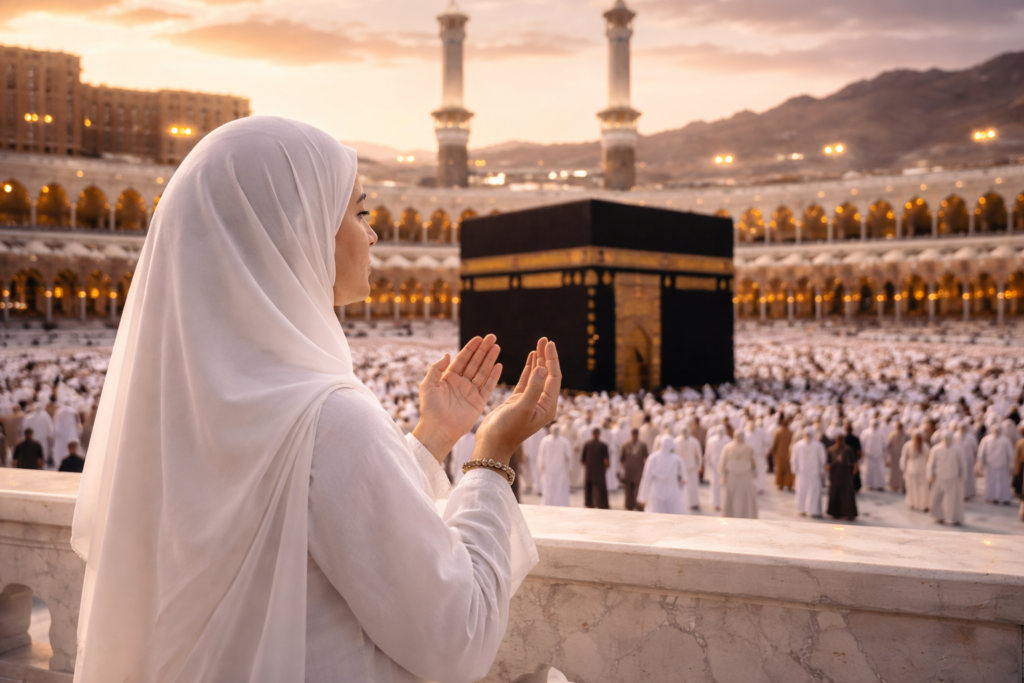
Performing Umrah is a beautiful act of worship that brings a believer closer to Allah ﷻ. For women, understanding the rules of Ihram is essential to ensure that their Umrah is valid and in accordance with the Qur’an and Sunnah. While many sisters focus on travel arrangements, hotels, and flights, the spiritual preparation is far more important than the physical journey.
As many Muslims begin planning their journey through Umrah Packages 2026, it becomes crucial for women to learn the rulings of Ihram before departure. Proper knowledge helps avoid mistakes that could require expiation (fidya) and ensures the pilgrimage is performed in the way taught by the Prophet ﷺ.
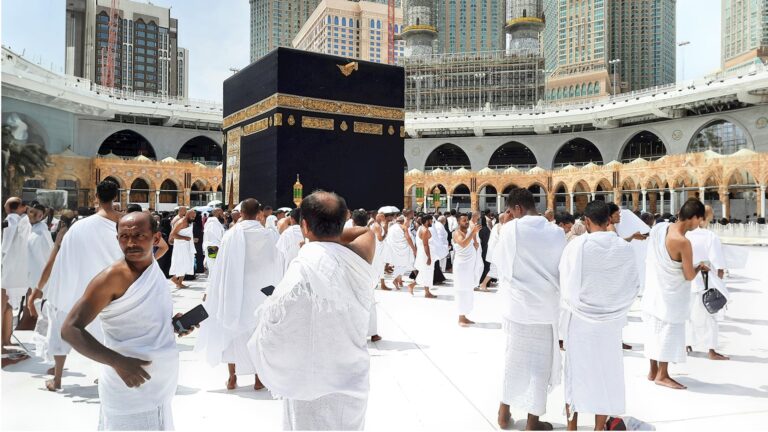
Umrah consists of four main acts: entering Ihram, performing Tawaf around the Kaaba, performing Sa’i between Safa and Marwah, and trimming the hair.
Allah says in the Qur’an:
“And complete the Hajj and Umrah for Allah.” (Surah Al-Baqarah 2:196)
This verse highlights that Umrah must be performed sincerely and according to divine guidance. Observing the rules of Ihram is part of completing Umrah properly.
Ihram is a sacred state that begins with intention (niyyah) and Talbiyah. Unlike men, women do not wear specific unstitched garments. Their Ihram is defined by intention and adherence to restrictions.
The Prophet ﷺ said:
“Actions are but by intentions.” (Sahih al-Bukhari & Muslim)
Thus, once a woman makes the intention for Umrah at the Miqat and recites the Talbiyah, she officially enters into the state of Ihram.
There is no prescribed color for women’s Ihram garments. A woman may wear any modest clothing that:
White clothing is not obligatory for women.
The Prophet ﷺ said:
“A woman in Ihram should not wear a niqab or gloves.” (Sahih al-Bukhari)
However, if non-mahram men are nearby, she may lower a loose cloth over her face without tying it. This maintains modesty while respecting Ihram rules.
Women are allowed to wear socks and closed shoes. There are no specific footwear restrictions for women in Ihram.
Once in the state of Ihram, certain actions become prohibited:
It is permissible to apply perfume before making the intention for Ihram, but once in Ihram, perfume must be avoided.
Allah says:
“And do not shave your heads until the sacrificial animal reaches its place of slaughter.” (Surah Al-Baqarah 2:196)
Scholars derive from this verse that removing hair or cutting nails while in Ihram is prohibited.
The Prophet ﷺ forbade performing or arranging marriage contracts while in Ihram.
Marital relations invalidate Umrah if they occur before completing the rituals. Islam emphasizes purity and devotion during this sacred state.
The Talbiyah is recited after making intention:
“Labbayk Allahumma Labbayk…”
Women should recite it softly. Unlike men, they are not required to raise their voices loudly.
The Talbiyah continues until the start of Tawaf.
A woman may enter Ihram even if she is menstruating. This ruling is based on the incident of Aisha (RA), when she began menstruating before performing pilgrimage. The Prophet ﷺ instructed her to:
This shows the mercy and flexibility of Islamic law.
During Tawaf:
For Sa’i between Safa and Marwah:
Allah says:
“Indeed, Safa and Marwah are among the symbols of Allah.” (Surah Al-Baqarah 2:158)
After completing Sa’i, a woman trims approximately a fingertip’s length from the ends of her hair. Shaving the head is not prescribed for women.
This marks the completion of Umrah and release from the state of Ihram.
Allah says:
“There is to be no sexual relations, no disobedience, and no disputing during Hajj.” (Surah Al-Baqarah 2:197)
Scholars extend this etiquette to Umrah as well.
Before traveling, ensure all documents and conditions are fulfilled, including obtaining your Umrah Visa according to current Saudi regulations. Women should also confirm guidelines regarding mahram requirements, vaccination rules, and travel policies to avoid complications during their journey.
Preparing properly helps you focus entirely on worship once you arrive in the blessed lands.
Ihram is not merely about clothing restrictions—it is a spiritual state of humility, patience, and devotion. A woman should:
In conclusion, understanding and following the Ihram rules according to the Qur’an and Sunnah ensures that a woman’s Umrah is valid and pleasing to Allah ﷻ. With sincere intention, modesty, and obedience to the teachings of the Prophet ﷺ, every sister can complete her Umrah with confidence and spiritual fulfillment. May Allah accept the efforts and grant a blessed and accepted Umrah to all. Ameen.