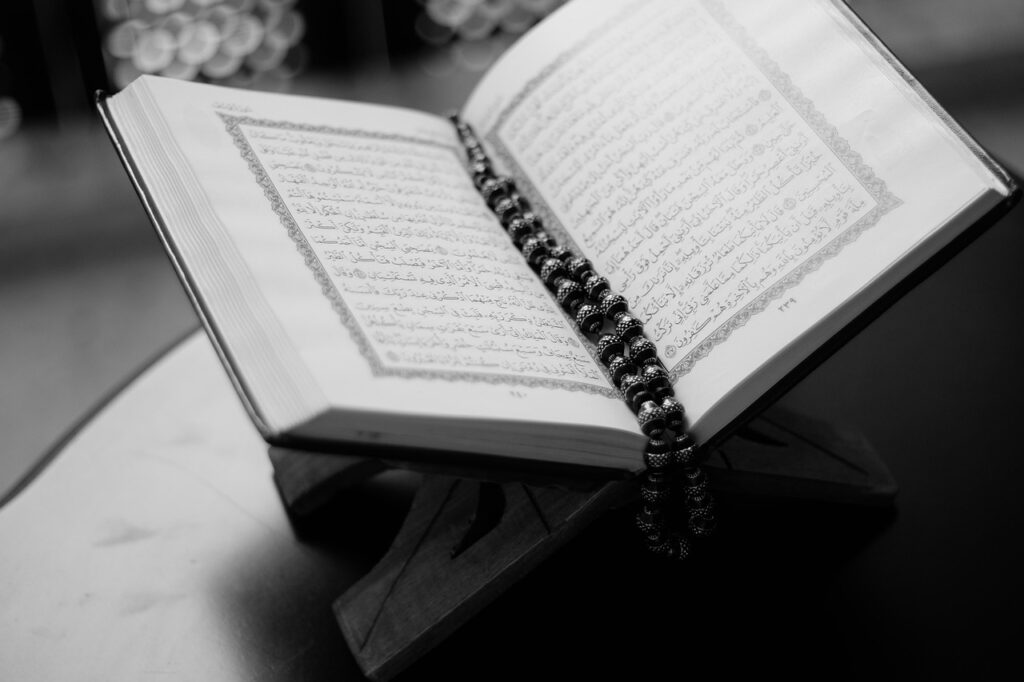
بِسْمِ اللَّهِ الرَّحْمَٰنِ الرَّحِيمِ
شروع اللہ کے نام سے جو بڑا مہربان نہایت رحم والا ہے
In the name of Allah, the Most Gracious, the Most Merciful
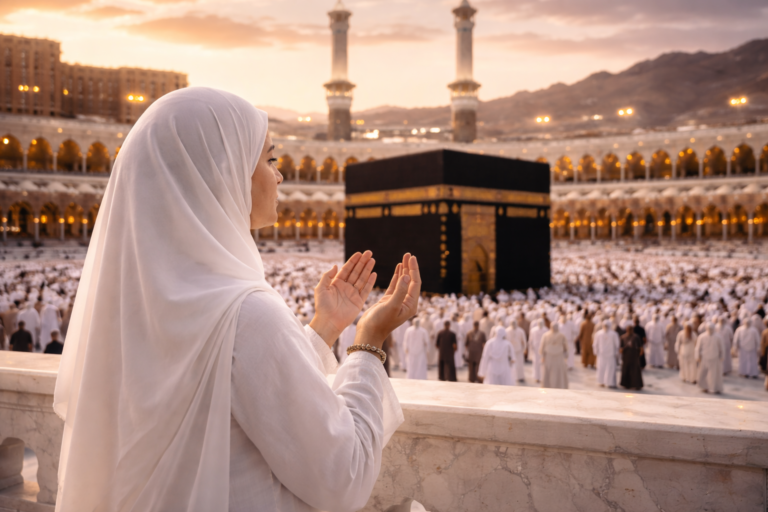
Tawaf is one of the most sacred acts of worship in Islam. It refers to circling the Kaaba seven times in a counterclockwise direction within Masjid al-Haram in Makkah. This powerful ritual symbolizes unity, devotion, and complete submission to Allah.
Tawaf in the Light of the Qur’an
Every year, millions of Muslims perform Tawaf during Hajj and Umrah, expressing their love and obedience to their Creator. But what exactly is Tawaf? What are its types, rules, and the correct way to perform it? This complete guide will explain everything in detail according to the Qur’an and Sunnah.
Tawaf is clearly mentioned in the Qur’an as an act of worship connected to the Sacred House. Allah says:
“And let them circumambulate the Ancient House.” (Surah Al-Hajj 22:29)
In another verse, Allah commands Prophet Ibrahim (peace be upon him):
“And purify My House for those who perform Tawaf and those who stand [in prayer].” (Surah Al-Hajj 22:26)
These verses show that Tawaf is not merely a physical act, but a divinely commanded form of worship rooted in the legacy of Prophet Ibrahim (AS).
Tawaf in the Sunnah of the Prophet (PBUH)
The Prophet Muhammad (peace be upon him) demonstrated the proper method of Tawaf during his pilgrimage. He said:
“Take your rituals from me.” (Muslim)
This hadith emphasizes that Muslims must follow the Sunnah when performing Tawaf, whether during Hajj or Umrah. The Prophet (PBUH) began Tawaf from the Black Stone, made seven circuits, and remembered Allah throughout.
When Is Tawaf Performed?
Tawaf is performed in several situations:
Many pilgrims begin their spiritual journey by booking Umrah packages to visit the Sacred Mosque and perform Tawaf as part of their Umrah rituals.
Step-by-Step Guide to Performing Tawaf
Here is a simple step-by-step explanation:
The intention is made in the heart. There is no specific verbal dua required for intention.
Wudu (ablution) is required according to the majority of scholars, as Tawaf is similar to prayer.
Begin each circuit from the Black Stone. If possible, kiss it. If not, point towards it and say:
“Bismillah, Allahu Akbar.”
Walk around the Kaaba seven times in a counterclockwise direction. Men are encouraged to perform Ramal (brisk walking) in the first three rounds during certain Tawaf types.
There is no fixed dua for each round. Pilgrims may recite Qur’an, make personal supplications, or read:
“Rabbana atina fid-dunya hasanah wa fil-akhirati hasanah wa qina ‘adhab an-nar.”
(Surah Al-Baqarah 2:201)
After completing seven rounds, pray two rak’ahs behind Maqam Ibrahim if possible.
Drinking Zamzam and making dua afterward is Sunnah.
Types of Tawaf in Islam
There are different types of Tawaf depending on the occasion:
Performed by pilgrims arriving for Hajj.
An essential pillar of Hajj performed after returning from Mina.
The final Tawaf before leaving Makkah after Hajj.
Performed as part of Umrah rituals.
Voluntary Tawaf that can be performed anytime when visiting Masjid al-Haram.
Rules and Conditions of Tawaf
To ensure Tawaf is valid, certain conditions must be met:
Women in menstruation are not permitted to perform Tawaf until they become pure.
Spiritual Significance of Tawaf
Tawaf represents the unity of Muslims around one center — the worship of Allah alone. Just as planets revolve around the sun, believers circle the Kaaba in harmony and devotion.
It also reflects equality in Islam. Regardless of race, nationality, or status, all stand before Allah as servants. This powerful image of unity is especially visible during Hajj and Umrah seasons.
Tawaf softens the heart, strengthens faith, and reminds the believer of the Day of Judgment when humanity will gather before Allah.
Common Mistakes to Avoid
The Prophet (PBUH) emphasized mercy and patience during pilgrimage. Tawaf should be performed calmly and with humility.
Final Thoughts
Tawaf is a deeply spiritual act that connects Muslims to centuries of faith and devotion. Rooted in the Qur’an and demonstrated by the Sunnah, it remains one of the most powerful expressions of worship in Islam.
Whether performed during Hajj, Umrah, or as a voluntary act, Tawaf symbolizes complete submission to Allah and unity among believers. Preparing properly, understanding the rules, and following the Sunnah ensures that this act of worship is both valid and spiritually rewarding.
When planning your sacred journey, choosing a reliable umrah travel agency can help ensure smooth arrangements, allowing you to focus fully on your worship and the profound experience of standing before the House of Allah.
May Allah accept the Tawaf of every believer and grant us the opportunity to visit His Sacred House again and again. Ameen.