

Winter home decor after Christmas is something I genuinely think about every single January — not because I love decorating that much, but because I’ve watched so many beautiful homes go from glowing and alive on December 25th to looking strangely hollow by the 26th.
The tree comes down.
The stockings disappear. And suddenly you’re left with these bare mantels and empty corners that feel almost worse than if you hadn’t decorated at all. That specific deflated feeling? It’s more common than people admit, and it has nothing to do with taste or budget.
I’ve helped a lot of homeowners work through exactly this, and what I’ve found is that the problem isn’t January — it’s the assumption that winter decorating ended with Christmas.
In this article, I’m walking you through how to build a real post-Christmas winter refresh that looks deliberate and feels warm all the way through February, using what you already have plus a few thoughtful additions that actually earn their place in the room.
Why Winter Home Decor After Christmas Feels So Hard — And Why It Doesn’t Have To
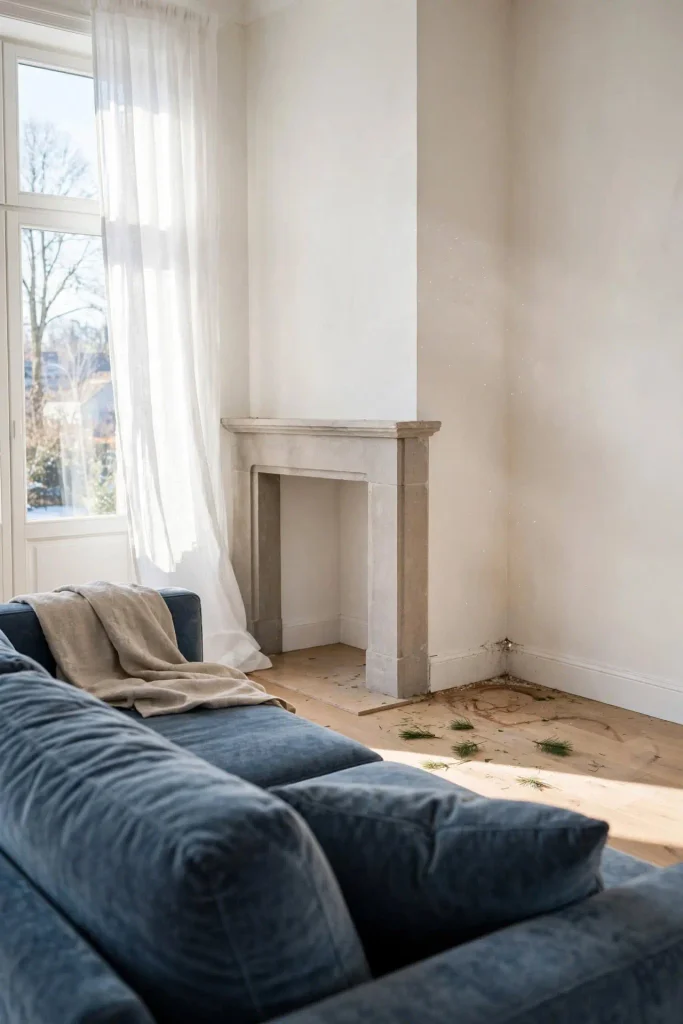
Most people assume the problem is January itself — that the month is just inherently bleak and there’s nothing to be done. That’s not actually it.
The real problem? Christmas decor does a specific job. It layers a room with warmth, light, and texture all at once. When it leaves, it takes all three things with it simultaneously, and that triple loss hits hard.
I learned this firsthand a few years ago when I pulled down my own tree and genuinely couldn’t figure out why my living room looked smaller. Nothing had moved. Same furniture, same layout. But without those layers of greenery, candlelight, and ornament color, the room felt like it had lost about 40% of its visual weight.
Sound familiar? That hollow feeling isn’t about Christmas being over — it’s about the room being under-dressed again, with no plan to fix it.
Here’s what actually changes things: treating post-Christmas winter as its own season instead of a sad aftermath. January and February have their own palette — deep creams, slate blues, warm grays, birch textures. Winter home decor after Christmas works when it leans into that rather than chasing the Christmas version of cozy.
You don’t need to reinvent the room. You need a different starting point — one that belongs to winter, not just the holidays. That shift alone makes the whole thing feel intentional instead of empty.
Strip the Space Down Before You Start: What to Remove, What to Keep

Start with a rule I give every single homeowner I work with: don’t decorate around the leftover Christmas stuff. Take it all down first. Every last bit of it.
I know that feels counterintuitive. Especially the greenery — pine garlands and euclidean branches look so neutral that people convince themselves they can stay. They can’t. Your eye knows where they came from, and they’ll pull the whole room back toward December no matter what you do around them.
That said, three things are worth keeping after Christmas comes down: candles (not holiday-scented ones — swap those), chunky throw blankets, and any warm-toned pillow covers that read “winter” rather than “Christmas.” Plaid in cream and camel? Stays. Plaid in red and green? Box it.
Here’s how I think about the edit. Ask yourself: if someone who’d never seen your Christmas decor walked in right now, would this item feel seasonal or holiday-specific? That question cuts through the confusion faster than any checklist.
When I did my own post-Christmas clear-out a few years back, I pulled fourteen individual decorative items off my mantel alone. It looked stark. But that blank surface was exactly what I needed — because winter home decor after Christmas only works if you’re building something new, not patching over something old.
Strip it bare. Give yourself a clean room. Then decide what actually belongs to January.
Build Your Winter Color Foundation with Texture, Not More Stuff

This is where most people go wrong after the holidays. They think they need to add things to make the room feel full again. More candles, new vases, a basket of something.
But the rooms I’ve styled that feel best in January? They’re actually less cluttered than they were in December — just more deliberate about texture.
Here’s what I mean. Texture does the visual work that color does in summer. A chunky knit throw draped over the arm of a sofa reads as warm the moment you walk in, before you’ve even sat down. A linen pillow in oatmeal or warm gray adds depth without demanding attention.
When I redid my own living room two Januaries ago, I stopped at three texture layers: a wool blanket, a raw-edged jute rug layered over the main rug, and a ceramic bowl I already owned in a matte finish. That was it. The room looked considered, not bare.
For color, think about choosing the right color palette before you buy a single thing — because winter after Christmas has its own distinct tones. Birch white. Slate. Warm cream. Those colors don’t need help from accessories if the textured pieces are doing their job.
Winter home decor after Christmas works best when you treat texture as your primary tool, not an afterthought. Three well-chosen pieces will always outperform a shelf full of filler.
Anchor Each Room with One Intentional Non-Christmas Winter Decor Focal Point
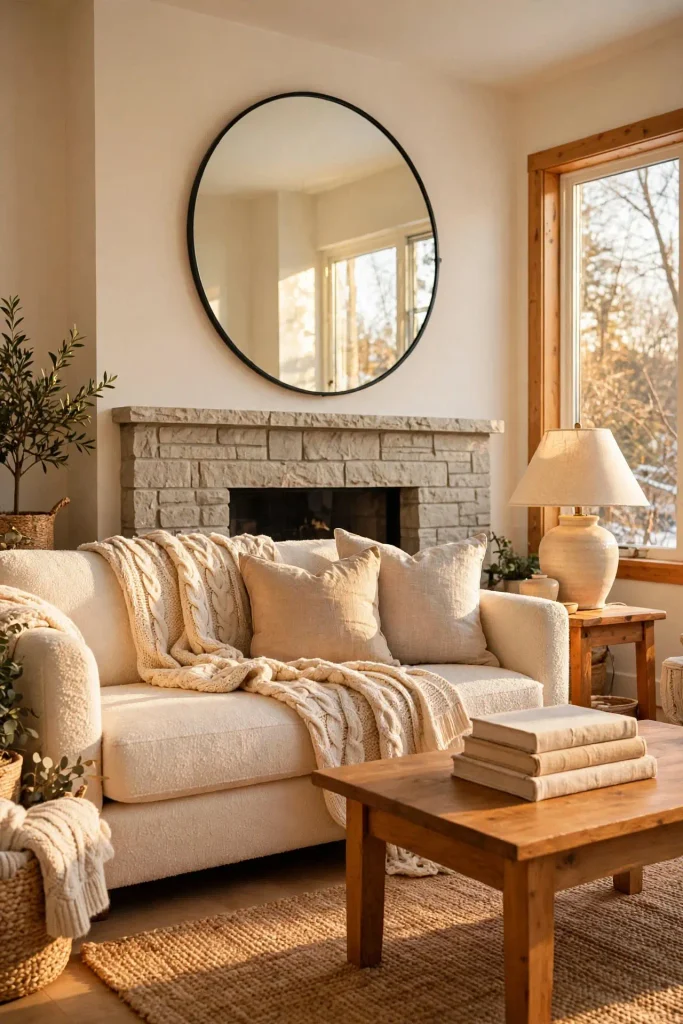
Every room needs one thing that stops the eye — a single element that earns its place on the wall or the table or the shelf without needing anything else to explain it.
Christmas gives you that automatically. The tree does it. The wreath does it. Pull those down and the room suddenly has nothing to land on, which is exactly why everything feels unfinished.
So before you add a single candle or bowl, pick one focal point per room that belongs to winter, not the holidays. Not two. One.
In my living room two years ago, I used a large birch branch arrangement in a matte black floor vase — nothing else on that wall. It cost me about $18 at a craft store, but it read like something considered and permanent. Visitors asked about it more than almost anything I’d put up at Christmas.
That’s the same logic behind what designers call aesthetic living room anchors — one strong piece that gives the whole room a reason to hold together visually.
For winter home decor after Christmas, good focal point options are simple: an oversized round mirror, a dried botanical arrangement, a stack of three linen-covered books on a coffee table. Pick whichever one fits your space, then leave the area around it deliberately quiet.
The restraint is the point. One strong thing beats five competing ones every single time.
Layer in Natural Elements That Make Winter Decor Feel Curated, Not Sparse

Natural elements are the fastest fix I know for that post-Christmas emptiness — and they cost almost nothing to pull off.
What actually works here isn’t buying more things. It’s choosing materials that belong to winter itself: dried seed pods, bare branches, pinecones you didn’t wire into a wreath, bundles of dried pampas or wheat. Things the season already made.
I started doing this after a client in Ohio told me her January living room felt like “a waiting room with better furniture.” She had a beautiful space and zero winter identity. We swapped in a shallow wooden bowl with a handful of pinecones, a few smooth river stones, and two dried cotton stems. Done. The whole room settled.
If you want to lean further into the branch-and-botanical direction, there’s a whole approach to natural non-Christmas tree decor that carries a room all the way through February without ever reading as holiday.
The rule I follow: three natural elements max per surface. One tall, one low, one in between. That scale variation is what makes it look intentional rather than like you just emptied your recycling bin onto the shelf.
Winter home decor after Christmas doesn’t need to be elaborate. It just needs to feel like someone made a deliberate choice — and a dried botanical arrangement in a $12 thrifted vase makes that statement just as clearly as anything expensive would.
Use Lighting to Do the Heavy Lifting Through the Darkest Months

Lighting is the one thing most people underestimate in January, and it shows.
Christmas strings every surface with warmth — the tree lights alone can make a room glow at 5pm like it’s still livable. Pull those down and you’re left with your regular overhead bulbs, which feel about as cozy as a parking garage in February.
Here’s the fix: stop relying on ceiling lights after dark. I switched my living room to floor lamps and table lamps only after Christmas a couple of years ago, and the shift was immediate — same room, completely different feeling by 6pm.
Warm bulbs matter more than people think. I recommend 2700K or lower for any lamp you’re running during winter evenings. That amber tone does what Christmas lights did — it makes the room feel inhabited rather than illuminated.
Candles count too, but placement is everything. Three candles clustered on a tray near the sofa will outperform six spread across the room every single time.
If you still have string lights that aren’t specifically Christmas-themed, keep them. There are genuinely beautiful fairy light design ideas that translate indoors without reading as holiday at all — draped along a shelf or inside a glass jar, they carry real warmth through the darkest weeks.
For winter home decor after Christmas, layered light sources — at least three at different heights — do more work than any decorative object you could buy.
Add the Finishing Details That Make After-Christmas Home Decor Look Deliberate

Details are where most people either pull it together or lose it completely.
They’re not the main event — the focal point and the texture layers do that work. But the right
The details I look for are small things that feel chosen, not placed. A single taper candle in an unexpected holder. One worn linen napkin folded under a ceramic bowl. A small stack of books with the spines turned inward so only the pages show — that one trick alone makes a shelf look ten times more considered.
A client in Toronto asked me why her January mantel still looked “off” after she’d done everything right. Turned out she had seven small objects competing for attention. We pulled four of them. The three that stayed suddenly looked like they belonged there.
That’s the finishing detail rule I follow: if you can’t explain why it’s there, it’s not a detail — it’s clutter.
For winter home decor after Christmas, those cozy finishing touches work best when they’re quiet — a beeswax taper, a folded throw with visible texture, one small natural element. Nothing announcing itself.
Winter home decor after Christmas doesn’t need a grand gesture at this stage. It needs three details that belong and nothing that doesn’t.
When Your Winter Refresh Still Feels Off: How to Troubleshoot a Flat Room

You did everything right. Texture layers, focal point, natural elements, lighting sorted. And the room still feels flat. That’s the most frustrating version of this problem, and I’ve been there myself.
Here’s what’s usually happening: the issue isn’t what you added — it’s the scale relationship between things. One tall item and four medium ones read as chaos even when each piece is beautiful on its own.
I troubleshoot this by standing in the doorway and squinting. Seriously. Squint until the individual objects blur and you’re just seeing mass and height. If everything lands at the same visual level, that’s your problem right there.
The fix I reach for first is almost always height variation — move one item to the floor, raise one item on a small riser or stack of books. That one change can shift the whole read of a surface in about four minutes.
If the scale is fine and it still feels off, the
are usually the ones nobody notices consciously — a slight gap between objects, one empty corner left alone on purpose, a texture that catches light differently from the others.
A client in Seattle described her January refresh as looking like a display at a garden center. Everything was right, nothing was wrong, but it lacked personality. We pulled one item and angled another slightly off-center. Done.
Winter home decor after Christmas doesn’t need more — it usually needs less, spaced differently. Trust the squint test every time.
Common Mistakes That Make Winter Home Decor Look Like an Afterthought
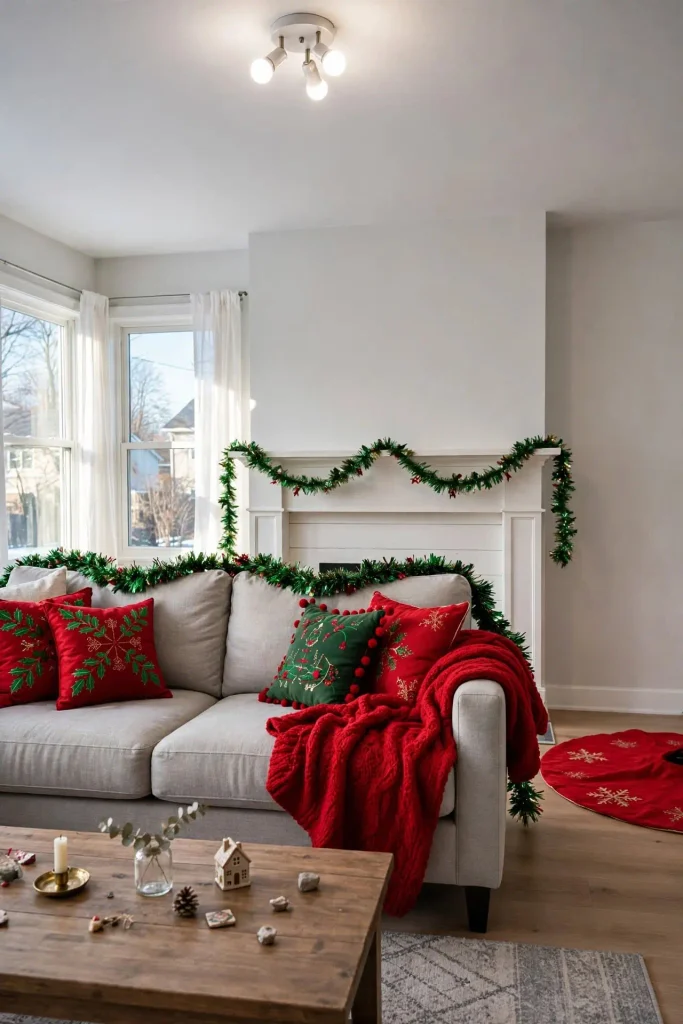
I see these mistakes constantly, and most of them happen in the first ten minutes of decorating.
The biggest one? Replacing Christmas with more stuff. A new seasonal vase, a few extra candles, a basket of pinecones from the craft store — and suddenly the room looks like a clearance display rather than a home someone actually lives in.
The second mistake is ignoring scale. People pull Christmas down and immediately fill the empty spots at the same height, the same size. Everything lands at eye level and the whole room reads flat before you’ve even finished.
Third — and this one surprises people — is keeping the room too bright. Overhead lights stay on, no floor lamps added, no candles lit. The result feels clinical rather than warm, no matter how good the decor choices are.
There’s a reason the rules every put-together room follows include restraint as a non-negotiable — because a room with three deliberate pieces will always beat one with nine uncertain ones.
I had a client in Chicago who redid her mantel four times in January and hated it every single time. She had eleven objects on a surface that should’ve held four. We pulled everything, put back three, and she texted me an hour later saying it finally looked like her house again.
Winter home decor after Christmas doesn’t fail because January is hard. It fails because people add instead of edit first.
Final Thoughts: A Winter Home That Feels Intentional, Not Deflated
January doesn’t have to feel like a loss. That’s the thing I want you to actually take away from all of this.
Winter home decor after Christmas works when you stop treating it like cleanup and start treating it like its own season. Different starting point, different result. Same house.
The homeowners I’ve worked with who nail this aren’t the ones with the biggest budgets. They’re the ones willing to strip the room bare first, pick one focal point, and resist the urge to fill every empty inch back up. That restraint is doing more work than any new purchase ever could.
If you’re looking at where to take things from here, there are some home decor trends worth trying that translate beautifully into a winter palette — warm organic shapes, matte finishes, layered neutrals. Worth a look before you buy anything.
But the real move? Start with what you have. One good throw, one branch in a vase, three candles on a tray. I’ve seen that combination do more for a January living room than a full cart from a home goods store.
Winter home decor after Christmas doesn’t need to be a project. It just needs to feel like someone made a choice. Once you stop decorating reactively and start decorating with intention, the room takes care of itself.
You’ve got more to work with than you think. Use it.