The best zero cost home decor ideas aren’t on Pinterest — they’re already sitting in your home, waiting for you to see them differently, and I think that’s what most people miss when they feel stuck with a space that just doesn’t feel right. You walk past the same shelf, the same corner, the same bare wall every single day. Nothing changes. And spending money you don’t want to spend feels like the only way out.
I’ve helped so many homeowners completely transform rooms without touching their wallets, and what I want to show you today is that free decorating isn’t about sacrifice — it’s actually about intention.
In this article, you’ll find real, specific ways to rearrange, repurpose, and rediscover what you already own, so your home starts feeling like the space you’ve been picturing all along.
Zero Cost Home Decor Ideas That Actually Make Your Space Look Expensive
Most people think “free decorating” means settling. It doesn’t.
Some of the sharpest-looking rooms I’ve ever styled cost absolutely nothing — because the secret was never the stuff. It was the arrangement, the light, and the editing.
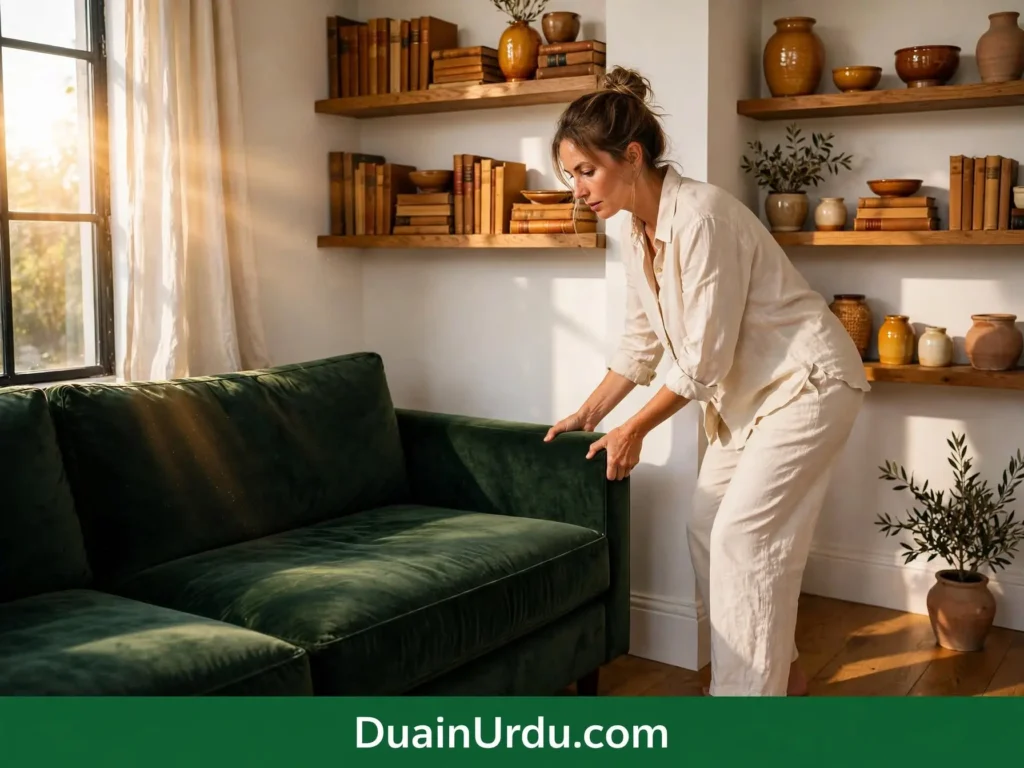
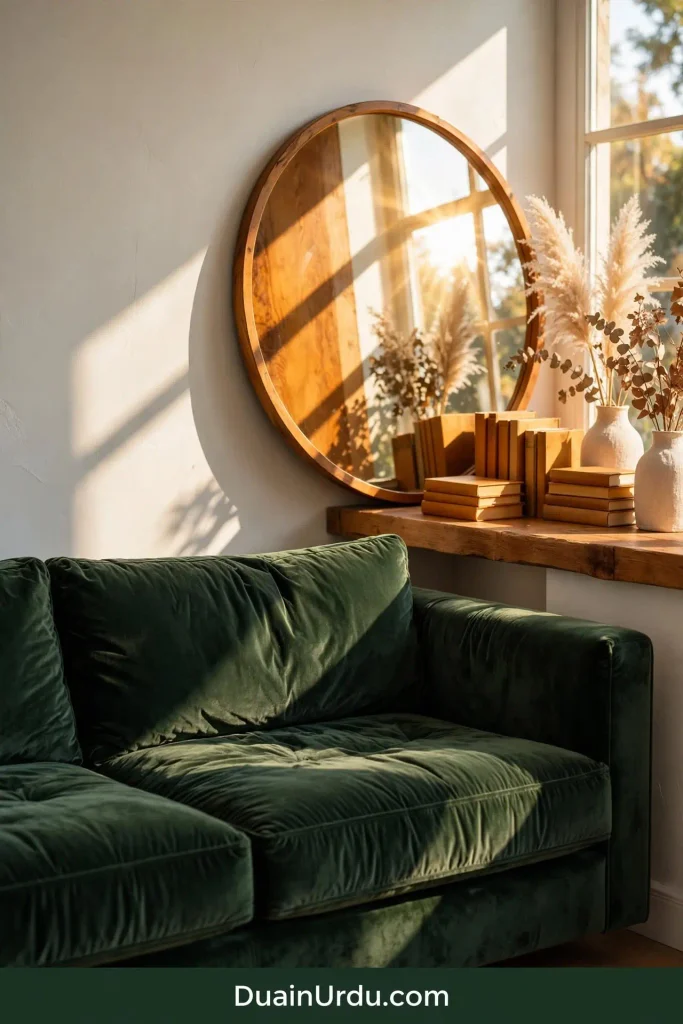
Here’s what I mean. I once helped a friend whose living room felt cluttered and cheap. She thought she needed new throw pillows, maybe a lamp. We didn’t buy a single thing. We pulled her sofa away from the wall by about eight inches, regrouped her books by color on one shelf, and moved a mirror from the hallway to face the window. Done. The room looked like she’d hired someone.
That’s the shift I want you to make today.
There are simple ways to transform your home that most homeowners scroll right past because they don’t look expensive on the surface. But they work, consistently, in real houses — not just staged ones.
The zero cost home decor ideas that make the biggest visual impact aren’t dramatic. They’re small, deliberate moves that change how a room feels before you even register what changed.
And honestly? The homes that look the most put-together are usually the ones where things were taken away, not added. Less clutter on a surface makes everything remaining look intentional — and intentional always reads as expensive.
Why a Beautiful Home Has Nothing to Do With How Much You Spend
I used to think the homes that looked incredible on magazine covers had something mine didn’t. Some special piece, some specific product, some secret budget I wasn’t in on.
Took me an embarrassingly long time to figure out the truth.
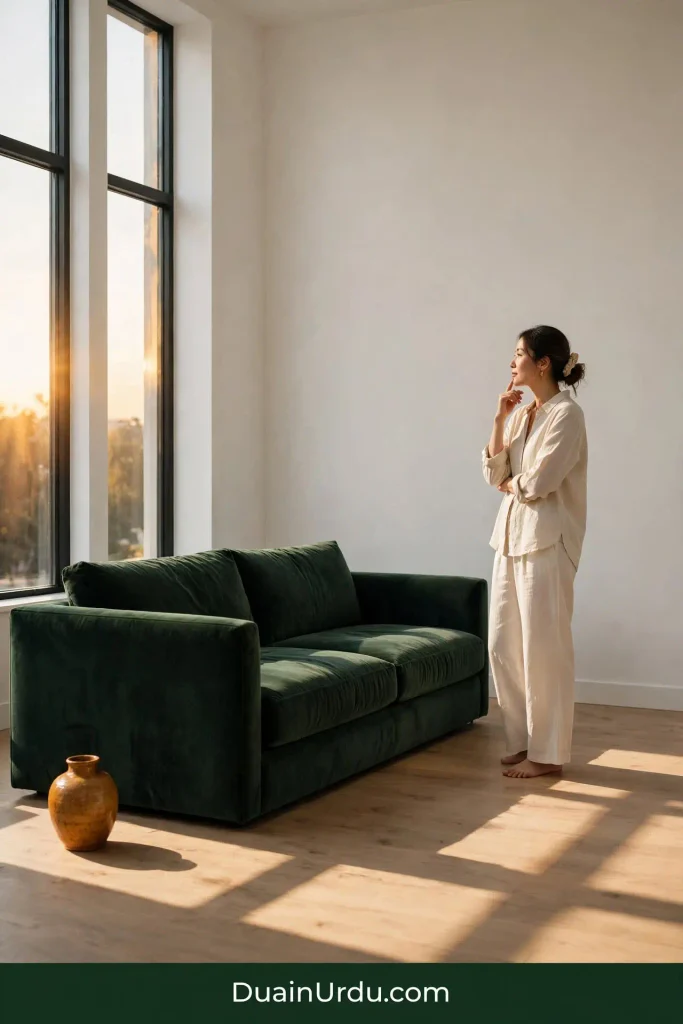
The most striking room I ever walked into belonged to a woman who hadn’t bought a single new thing for her home in three years. What she had done was edit ruthlessly — pulled out the pieces that didn’t earn their place and let the good stuff breathe. The room felt expensive because nothing competed for attention.
That’s what spending money actually buys most of the time. Not beauty. Just more stuff to manage.
Sound familiar? You add a new throw, a candle, a little ceramic something — and the room still feels off. Because the problem was never a missing object. It was the visual noise underneath it.
Zero cost home decor ideas work precisely because they force you to look at what’s already there. You stop adding and start seeing. And when you see clearly, you start making decisions that actually change how the room feels — not just how full it is.
I always tell homeowners this: a $4,000 sofa in a cluttered room looks cheap. A ten-year-old sofa in a calm, deliberate space looks considered. The room wins every time.
Rearranging What You Already Own to Create an Entirely New Feel
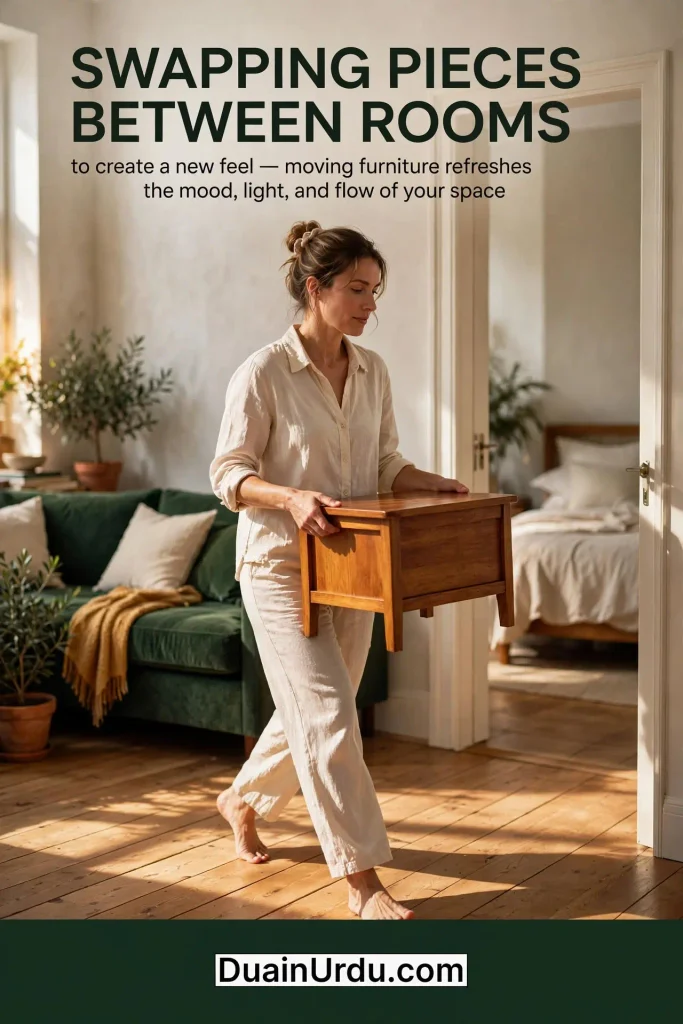
Start by just walking into the room and pretending you’ve never seen it before. Sounds strange, I know. But familiarity is the enemy of fresh eyes — and fresh eyes are everything.
The single highest-impact move I keep coming back to is pulling furniture away from walls. Even six inches. Rooms feel immediately more intentional because floating furniture creates a sense of breathing space that nothing you can buy replicates.
Second thing I always try: swap pieces between rooms entirely. That side table crowding your bedroom might be exactly what your living room entryway needs. A lamp that feels wrong in one corner can completely anchor another.
This is actually one of what aesthetic living rooms share — a sense that every piece was chosen deliberately for its exact spot, even when it wasn’t.
I once spent an afternoon moving seven pieces between four rooms without buying a single thing. The bedroom felt calm for the first time in months. The sitting room finally had a focal point. Zero cost home decor ideas don’t get more effective than this.
The rule I follow: if something has sat in the same spot for over a year without you noticing it, it’s probably doing nothing. Move it or edit it out completely.
Try this before you open a single shopping tab. Most rooms don’t need more — they need better placement of what’s already there.
How to Use Nature as Free Decor: Branches, Stones, Leaves, and More

Nature is free. Always has been. And it photographs better than most things you can buy.
I started bringing the outdoors inside after a particularly tight month when I had nothing to spend — and I’ve never fully stopped, because the results genuinely surprised me.
A single dried eucalyptus branch in a tall glass bottle does more for a shelf than three purchased decorative objects competing for the same space. The texture reads as intentional. The color is always right because nature doesn’t clash with itself.
Here’s what I actually collect on walks:
- Fallen branches — even bare ones look sculptural propped in a corner or standing in a ceramic pot
- Smooth river stones — group three of similar size on a tray and they look like a curated set
- Large leaves — pressed flat under a heavy book for a week, then framed, they become actual wall art
- Pine cones, seed pods, dried grasses — any of these clustered together on a wooden board become a centerpiece
The rule I follow: odd numbers only. Three stones, five branches. Even numbers feel accidental. Odd feels chosen.
These zero cost home decor ideas don’t just save money — they bring a calm, organic quality into a room that manufactured decor rarely manages to pull off.
Transforming Everyday Household Items Into Intentional Decor Pieces
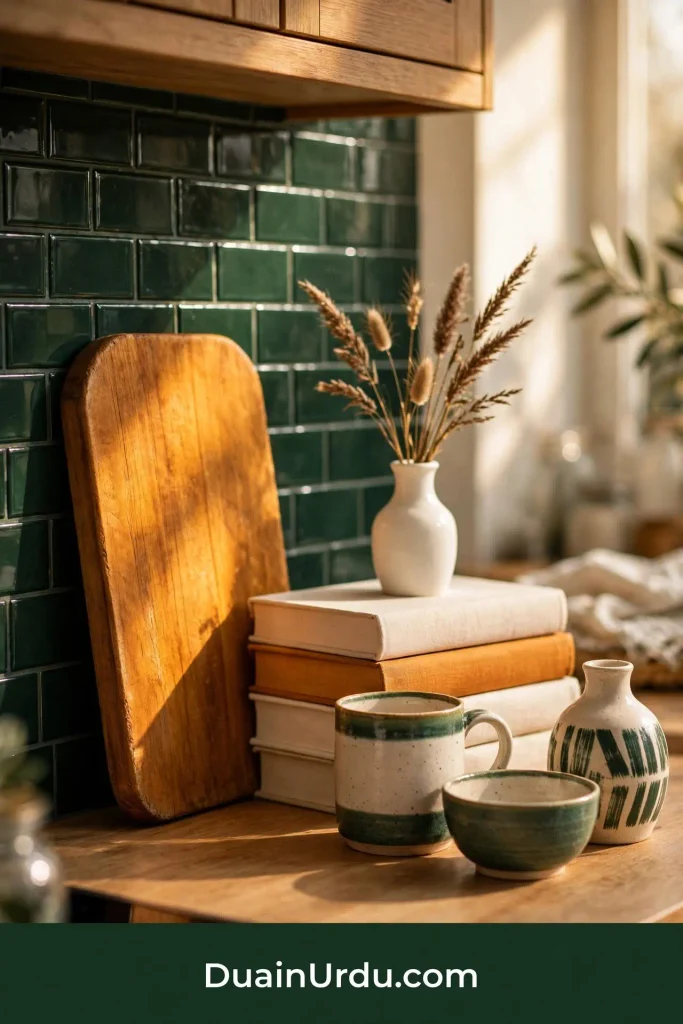
Your kitchen, your bathroom, your linen closet — they’re all hiding decor you haven’t noticed yet.
I pulled a wooden cutting board off my counter once and leaned it against the kitchen backsplash just to get it out of the way. Then I left it there for a week because it looked better than anything I’d bought for that shelf.
That’s the thing about everyday objects. When you remove them from their function for a moment, you start seeing their shape and texture instead.
Here’s what I mean by that practically. A stack of hardcover books becomes a side table riser. A glass pitcher holds dried grasses. A linen napkin folded over a towel bar reads as a styled moment, not just storage.
These are the same DIY tricks that fool everyone into thinking a room was professionally decorated — just using objects that were already there.
The shift is small but it matters. Stop asking “what does this do?” and start asking “how does this look?” You’ll be surprised how many things pass that second test.
One rule I follow: group by material, not by category. Three ceramic pieces together — a mug, a small bowl, a vase — look like a collected set even if they came from completely different places and years.
Zero cost home decor ideas don’t get more practical than this. What’s already in your home is enough.
Breathing New Life Into Your Living Room Without Buying a Single Thing
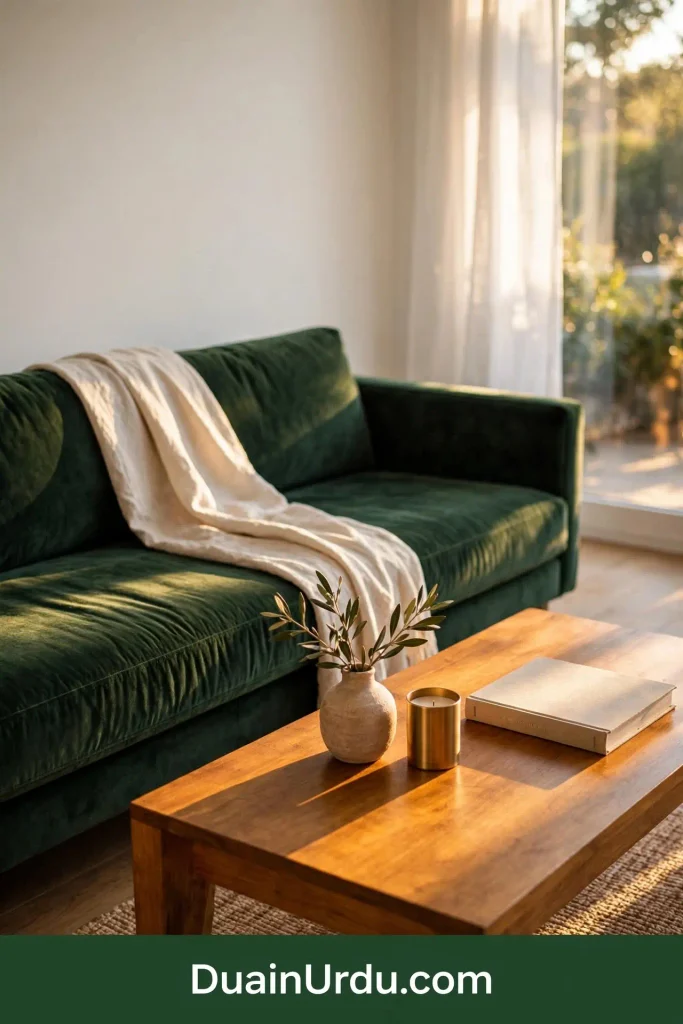
The living room is usually where I start when someone tells me their whole home feels wrong. Not because it’s the most important room — but because it’s the one you see first, sit in most, and judge hardest.
Here’s what actually moves the needle: remove before you rearrange. Clear every surface completely. Every book, every candle, every small object off the coffee table and shelves. Then only put back what you genuinely love or genuinely need. I did this once and left off about forty percent of what had been there. The room looked twice the size.
Sound familiar? You keep adding things hoping something will click, but the base layer of clutter is still sitting underneath all of it.
After you’ve edited, look at your sofa angle. Most people push it flat against the wall out of habit, not intention. Pulling it forward even eight inches creates a conversation zone that instantly feels more deliberate — more like a room someone designed rather than just filled.
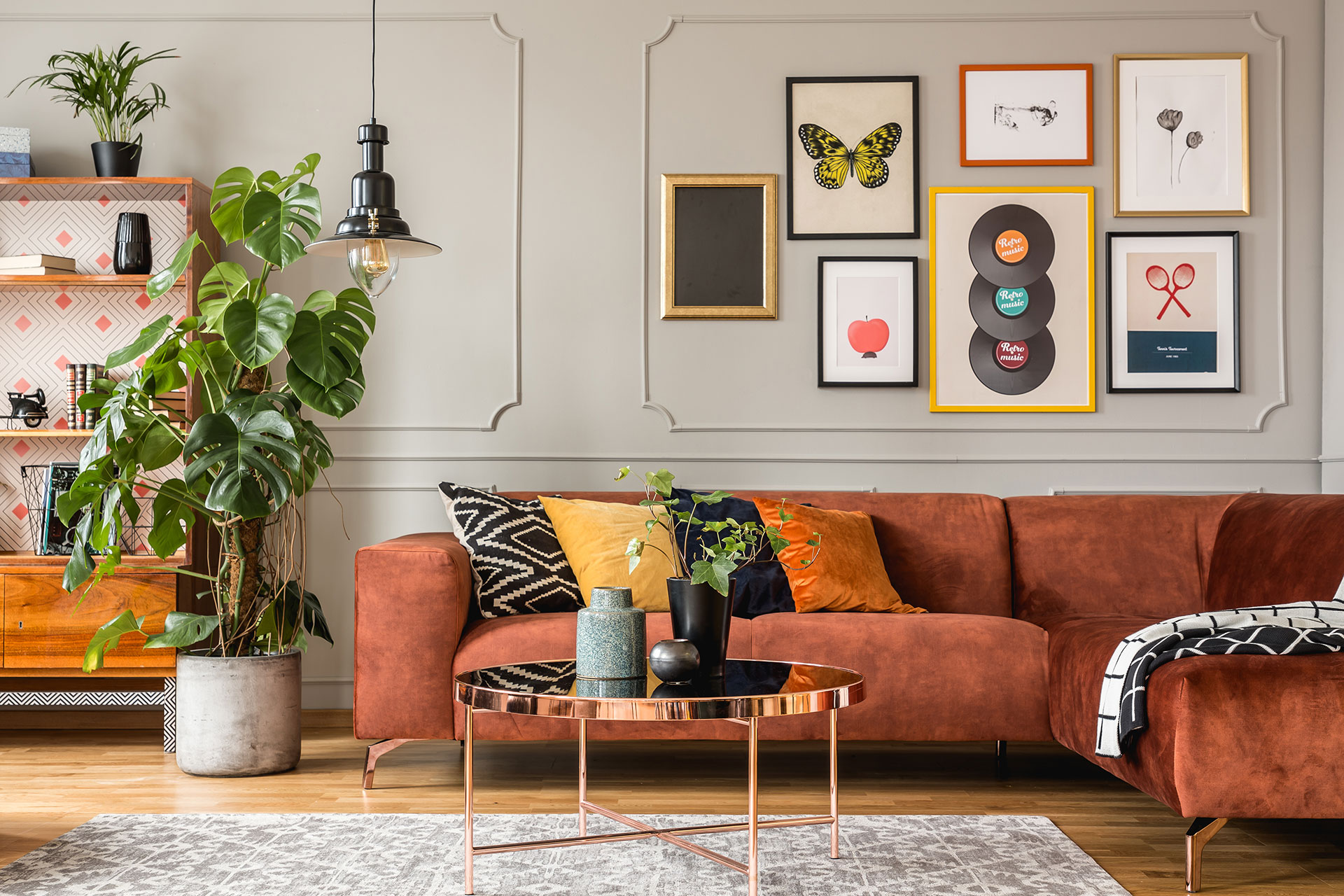
If you’re working toward cozy living room decor ideas that actually feel warm rather than staged, layering a folded throw at a diagonal across one sofa corner does more visual work than most purchased accessories ever could.
These zero cost home decor ideas are most powerful in living rooms because that’s where visual noise accumulates the fastest. Edit it down, shift one piece, and the whole room resets.
Free Digital Art, Printables, and Wall Gallery Ideas That Look Curated
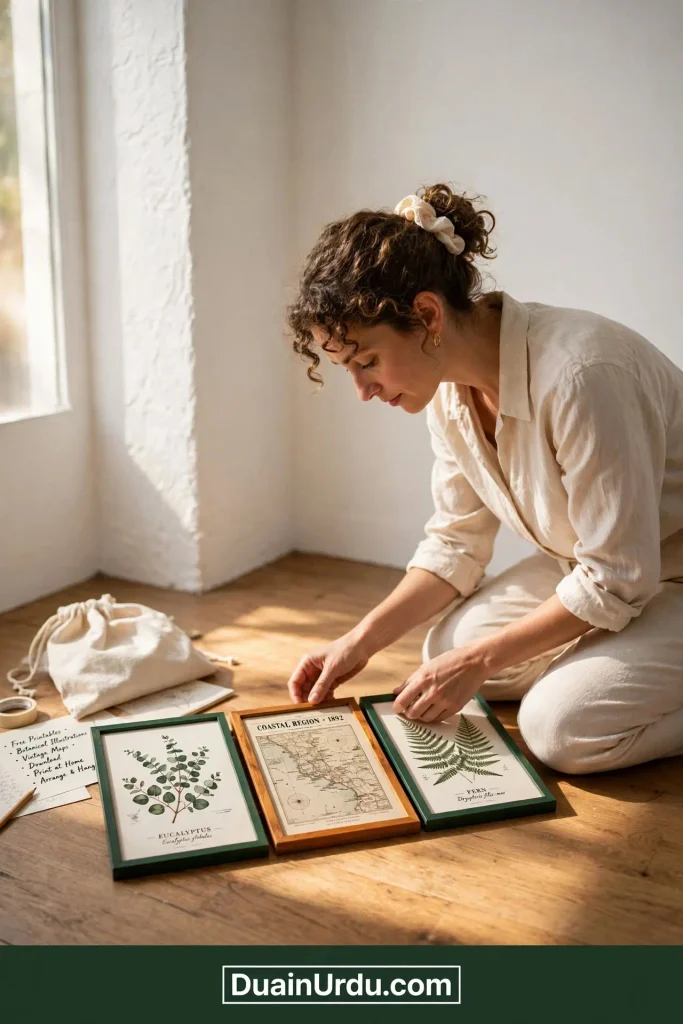
Bare walls are one of the fastest things I help people fix — and it costs nothing if you know where to look.
Free printables are everywhere. Sites like Unsplash and the Library of Congress digital archive let you download high-resolution artwork at no cost. I’ve printed botanical illustrations, vintage maps, and minimalist line drawings on regular printer paper, popped them into frames I already owned, and the result looked like a gallery wall someone spent real money building.
The frame matters more than the print. A cheap print in a clean, consistent frame reads as intentional. A gorgeous print in a mismatched one doesn’t. So before you search for new art, pull together every frame in your house and just look at what you have.
When you’re thinking through photo wall display ideas, the arrangement is where most people go wrong — they space frames too far apart. Tighter groupings, with gaps of two to three inches max, feel curated. Wide gaps feel accidental.
I always lay the whole arrangement on the floor first. Spend ten minutes shifting things around until it looks balanced before a single nail goes in. That one habit has saved me from a wall full of unnecessary holes more times than I can count.
These zero cost home decor ideas for walls work because they’re about curation, not spending. The art was always available. You just needed to know it existed.
Smart Ways to Source Free Decor From Your Community and Online Platforms
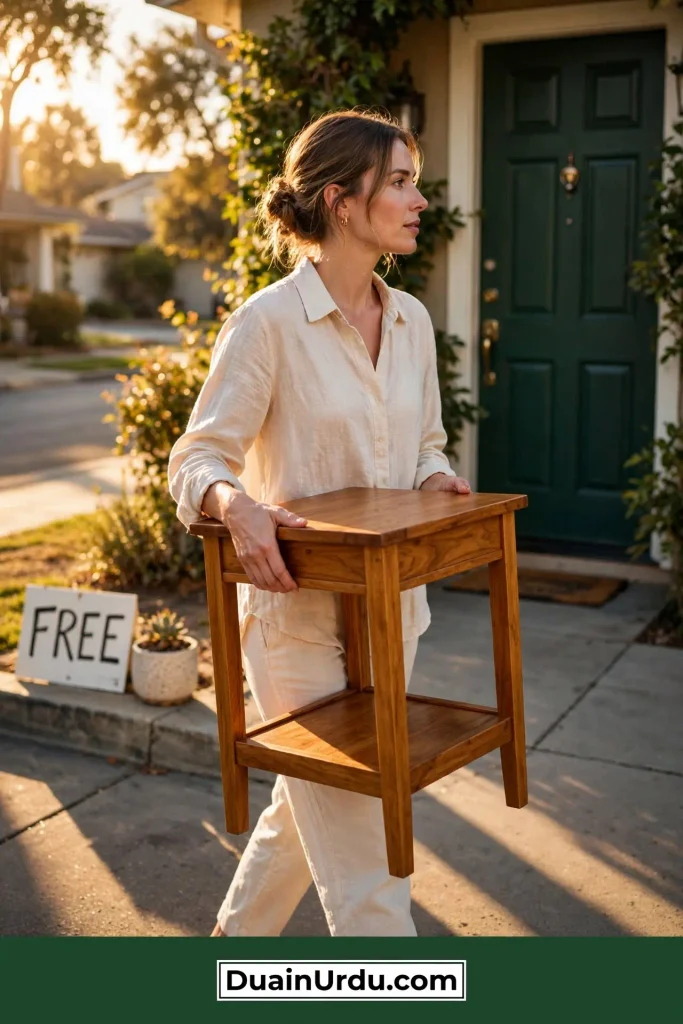
Most people don’t realize how much free decor is literally being given away in their own neighborhoods every single week.
Facebook Marketplace has a “free” filter that most people scroll right past. I check it maybe once a week, and I’ve picked up a solid wooden side table, two ceramic planters, and a mirror — all free, all within three miles of my house.
Nextdoor is the same. Neighbors post things before trash day constantly. You just have to be looking.
Here are the platforms worth checking regularly:
- Facebook Marketplace (free filter) — set your radius to five miles and check every few days
- Nextdoor — neighbors post curbside finds before the truck comes
- Freecycle.org — a whole network built around giving things away locally
- Buy Nothing groups — hyper-local Facebook communities where people post anything from frames to furniture
The trick isn’t just finding things. It’s knowing what to look for — and that’s where budget finds that look expensive actually train your eye to spot quality over clutter.
One rule I follow: only pick up something if you can picture exactly where it goes. Otherwise it becomes the clutter you were trying to escape.
These zero cost home decor ideas from your community work because somebody else already bought the thing. You just have to show up before the landfill does.
When Zero-Cost Isn’t Quite Enough: Low-Budget Upgrades Under $500 That Deliver the Most Impact
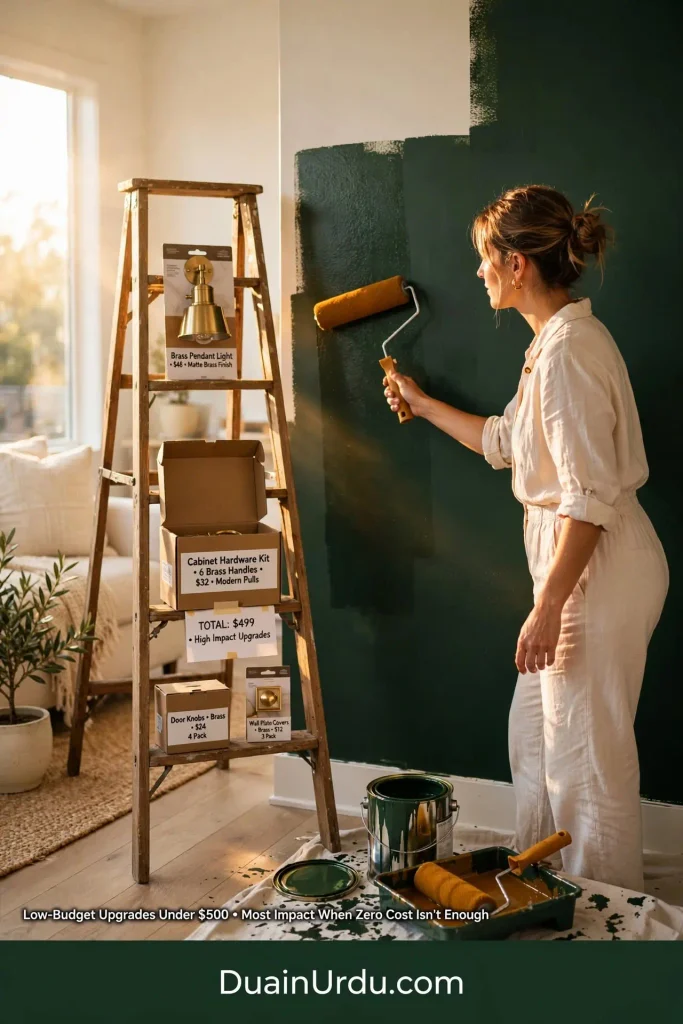
Sometimes the free stuff gets you 80% of the way there. And that last 20%? It’s worth being strategic about.
I tell homeowners the same thing every time: don’t spread $500 thin. Buying ten small things at $50 each rarely moves the needle. One or two targeted upgrades almost always do.
The highest-return purchases I’ve seen in real homes are almost never decorative. They’re structural — the things that change how a room actually functions and feels rather than just what sits on a shelf.
Here’s where that budget actually lands:
- New lampshades ($15–$40 each) — swapping a dated shade for a clean linen or drum shade transforms a lamp you already own into something that looks intentional
- One large mirror ($60–$150) — placed to face a window, it doubles your light and makes a small room feel like a completely different space
- Quality curtain rods hung high ($30–$80) — mounting rods close to the ceiling and letting panels fall to the floor makes any window feel taller than it actually is
- A single low-profile area rug ($80–$200) — one that’s bigger than you think you need; this single swap grounds a room faster than anything else I know
These aren’t replacements for zero cost home decor ideas. Think of them as the frame around the work you’ve already done for free.
Spend once, deliberately. Then stop.
Mistakes That Make Budget Decorating Look Cheap Instead of Intentional
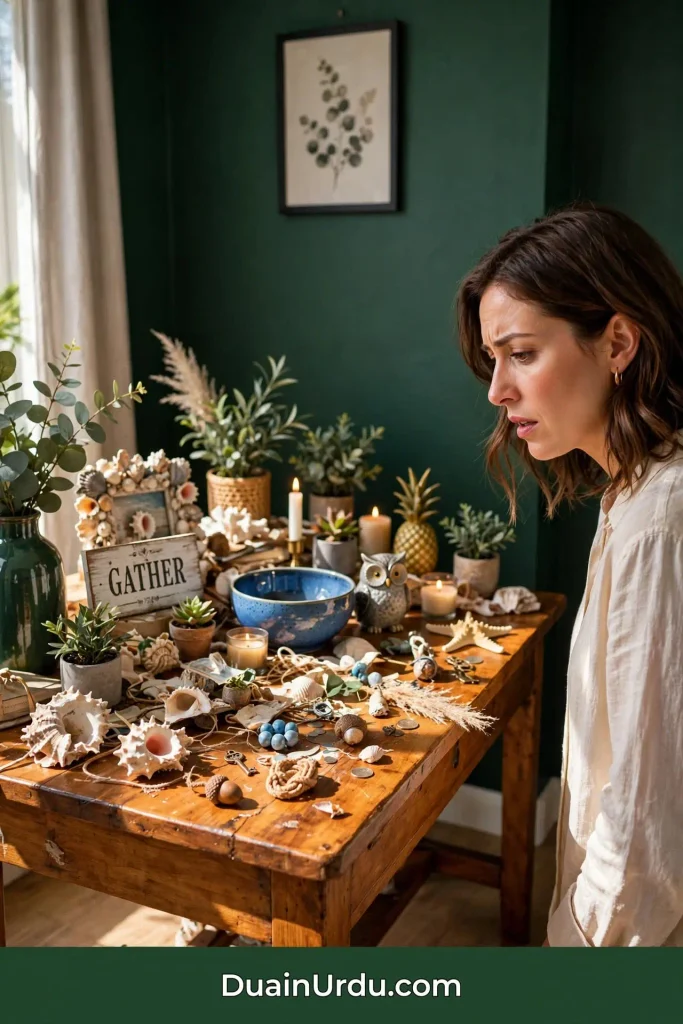
The biggest mistake I see over and over is mixing too many styles at once. Someone grabs a coastal frame, a farmhouse sign, a modern ceramic — and suddenly nothing reads as chosen. It just reads as random.
Sound familiar? The pieces might all be fine on their own. Together, they cancel each other out.
The rules modern rooms always follow come down to one thing: visual consistency. Pick a material — wood, ceramic, linen — and repeat it. That repetition is what makes a room feel like someone thought it through.
The second mistake is too many small items scattered across surfaces. I counted seventeen objects on a client’s console table once. Not one of them stood out. Grouped down to five, the whole thing looked curated rather than crowded.
Third: hanging art at the wrong height. Eye level means 57 to 60 inches from the floor to the center of the frame — not wherever the nail already was. That single adjustment has made more walls look intentional than any new print ever could.
These zero cost home decor ideas fall flat fast if the execution is sloppy. Free doesn’t mean careless. It means being more deliberate, not less.
Edit down. Stay consistent. Measure once. The effort is small. The difference it makes is not.
Final Thoughts: A Beautifully Decorated Home Is a Skill, Not a Spending Limit

I want to leave you with something that actually stuck with me early on in this work.
A homeowner I was helping once apologized before I even walked through her door. Said the place was “too basic to do anything with.” Forty-five minutes later, we hadn’t spent a cent, and she was standing in her own living room saying it finally felt like her.
Nothing changed except how she used what was already there.
That’s the whole idea. Decorating well isn’t about access to money — it’s a skill. You learn to see differently. You train your eye to spot what’s off, what’s competing, what just needs to move six inches to the left.
If you want to transform your space on any budget, the first step is always the same: stop looking at what’s missing and start looking at what’s already there.
The zero cost home decor ideas in this article aren’t shortcuts. They’re the actual foundation — the part most people skip because it doesn’t feel like doing something.
But editing a shelf, floating a sofa, swapping a lamp between rooms? That’s real decorating. That’s what the rooms you love most actually look like from the inside.
Start with one room, one afternoon. You already have everything you need.